SERVICE REQUEST?
Fill out the form below.
Find our nearest location
Your Local Office

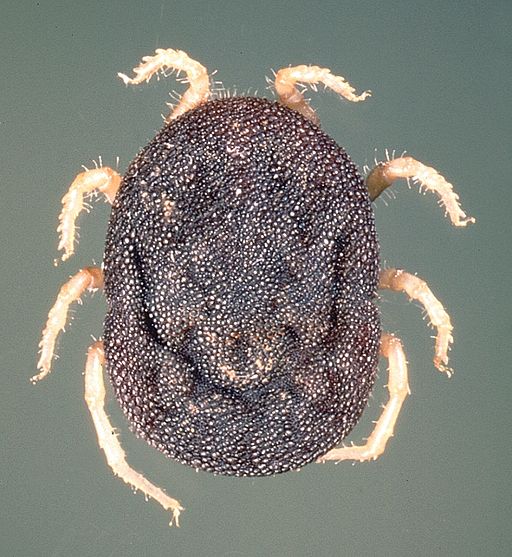
Soft Tick
Attribution: Alan R Walker,[CC-BY-SA-3.0], via Wikimedia Commons
Size:
About 1/4-inch in length.
Color:
Varies depending on species from sandy brown, reddish brown to dark brown.
Behavior:
Soft ticks differ from the hard ticks in that their body shape is oval and the head and mouthparts are hidden underneath the body. Soft ticks also are more flesh-like in appearance and do not have the hard, flattened exterior of ticks such as the brown dog tick, American dog tick, and similar species. The most commonly encountered soft ticks around buildings are those that infest birds belonging to the genus Argas and those infesting rodents of the genus Ornithodoros. Rodents transmit the spirochete that causes relapsing fever in the western U.S. Cabins, rural homes and other secluded buildings that become infested with rodents may potentially house Ornithodoros soft ticks. Should the rodents leave or tick populations become too high, the ticks may attach themselves to persons residing or sleeping in infested buildings. Bird or fowl ticks of the genus Argas may be encountered on farms where poultry are kept or in buildings infested by pigeons that carry the pigeon tick, A. reflexus. These ticks are quite mobile and may crawl significant distances seeking hosts, such as invading a structure on a farm or moving down through a building from pigeon roosts.
Soft ticks will be present wherever their rodent or bird hosts live. Rodent burrows, attics, wall voids and crawl spaces are just a few examples.
When soft ticks are found within a building, Terminix recommends consulting a professional for assistance. The birds or rodents serving as hosts must first be controlled and/or excluded. Further steps must be taken ensuring rodents or birds cannot reenter the building. It is important to remove any rodent or bird nest that is accessible and also treat cracks and voids where ticks may be located. Should you discover a tick imbedded in your skin, do not grasp it by the abdomen and pull. You may squeeze its fluids into your skin, which increases the chances for infection. Use fine-tipped tweezers to grasp the tick by the head next to the skin and slowly pull backwards. Working slowly will permit the tick to withdraw its mouthparts so they do not detach and remain in the skin to become infected. Once the tick has been removed, cleanse the area well with soap and water. You may want to disinfect the bite site with alcohol or apply an antibiotic cream.
Family Name:
Family Argasidae, Argas spp., Ornithodoros spp.
Read What Our Clients
Are Saying
Zach came by And there are initial set up. Was quick efficient professional. He explained everything clearly. Price was fair. Will continue to use Terminix as my pest control.
Super friendly and dedicated to quality customer service!
Incredible customer service. Thorough and professional!
Ronaldo provides exceptional service. I recommend his customer service
Ronaldo Thomas did a great job. Thank you sir for taking your time and not rushing great service
Ronaldo was very pleasant, prompt, and informative. Great Job!
Quenton, is a great technician did a thorough job.
Daniel MainsHe was very well informed and kind. Made the process easy and stress free.
Do you professional and his business quite well?nAnd very respectful of the property
Very attentive work with excellent customer service and performance!
Ronaldo (Thomas) was amazing! He goes above and beyond ever service!
I had my home sprayed for pest control and had termite bait traps put in around the perimeter of my home. Mr. Quenton Lane exemplified professionalism and was very knowledgeable about any questions I had. In a time where customer service can lack, everyone I’ve dealt with from Terminix have been fantastic. I0/10
SERVICE REQUEST?
Fill out the form below.