SERVICE REQUEST?
Fill out the form below.
Find our nearest location
Terminix Residential Exclusion Services
Small gaps can create big pest problems. Rodents, insects, and wildlife can enter through cracks, vents, rooflines, utility openings, and damaged seals. At Terminix, our exclusion service identifies these weak points and provides a customized way to close them.
Unlike treatments that address pests after they enter, exclusion focuses on prevention. It strengthens your home’s exterior and limits the routes pests can use to reach attics, crawl spaces, walls, kitchens, and other living areas.
Comprehensive Pest Control Exclusion Solutions
Effective exclusion pest control begins with a close inspection of the home. A trained technician looks for active pest signs, possible entry points, and conditions that may attract unwanted visitors.
Terminix provides pest control exclusion services that help stop rodents, cockroaches, insects, and certain wildlife from moving into or through your home. The service may address openings from the foundation to the roofline, depending on the property and the type of pest pressure.
Common areas that may require attention include:
- Gaps around pipes, cables, and utility lines
- Cracks along the foundation or exterior walls
- Openings around windows and doors
- Damaged weather stripping or loose door seals
- Unprotected attic, gable, and turbine vents
- Spaces between exterior walls, fascia, and roofing
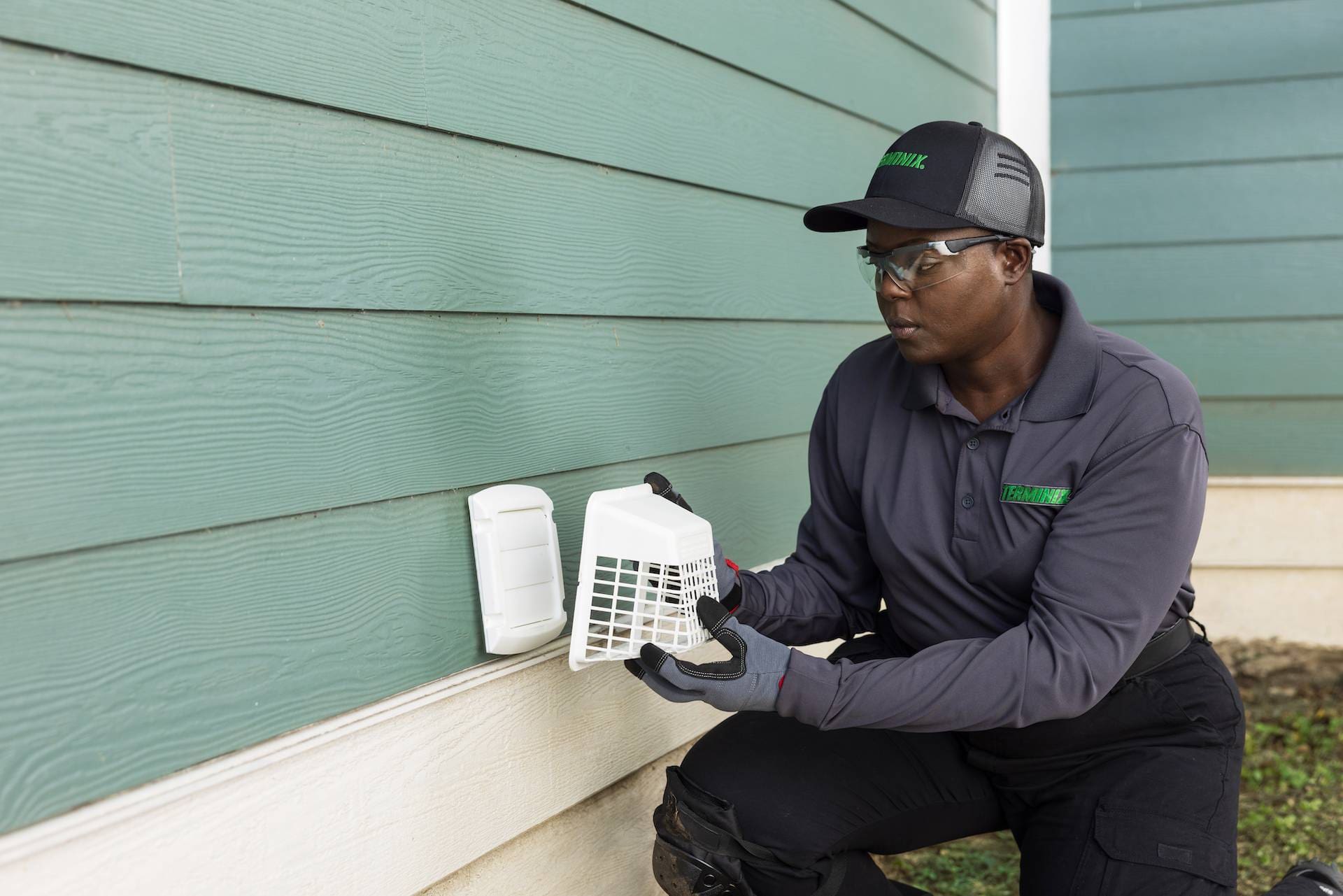
- Openings around dryer, bathroom, and oven vents
- Garage door corners and lower door gaps
- Crawl space and foundation vents
- Roof returns, soffits, chimneys, and eaves
Closing these routes can also limit movement inside the home. For example, sealed cracks and crevices make it harder for mice, rats, and cockroaches to travel unseen between rooms, wall voids, and storage areas.
For broader protection, explore Terminix residential pest control services. Schedule Your Terminix Exclusion Inspection Today
Terminix Exclusion Plan
We customize every exclusion service around the condition of the home and its specific pest risks. Our technician examines the structure, identifies vulnerable areas, and recommends the most appropriate work based on the findings.
The Terminix exclusion plan generally follows four important stages:
|
Stage |
Main Purpose |
What It Helps Address |
|---|---|---|
|
Inspection |
Find pest activity and entry points |
Hidden gaps, damaged vents, nesting signs |
|
Sealing |
Block access to the structure |
Cracks, roofline gaps, utility openings |
|
Monitoring |
Check for continued pest pressure |
Recurring activity or missed routes |
|
Follow-up |
Confirm results and adjust the approach |
New openings or additional control needs |
The recommended scope and completion time depend on the home. A small number of ground-level gaps may take less time than extensive attic, roof, or crawl space work. Request a Customized Home Exclusion Plan
Why Exclusion Work Is Essential for Your Home
Treatments, traps, and baiting can address pests already inside your home. However, they may not stop other pests from using the same openings. This is why the exclusion work pest control professionals perform is so important. By finding and closing potential entry points, we address one of the main causes of recurring infestations.
Exclusion delivers several long-term advantages:
- Helps reduce repeat infestations
- Limits hidden movement through walls and ceilings
- Protects insulation, wiring, drywall, and stored belongings
- Reduces nesting opportunities in attics and crawl spaces
- Supports rodent, wildlife, and general pest treatments
- Helps homeowners spot structural gaps before they worsen
- Reduces reliance on repeated reactive treatments
Cost Savings, Prevention, and Peace of Mind
Preventive repairs can save money by reducing the chance of repeated pest treatments and property damage. Rodents may chew electrical wiring or insulation. Wildlife can damage vents, soffits, and roof components. Closing entry points early can help prevent these problems and give homeowners greater peace of mind.
Moisture can also make crawl spaces more attractive to insects, rodents, termites, and wood-decay fungus. If damp conditions are part of the problem, Terminix moisture control services may complement the exclusion strategy.
Targeted Exclusion Methods
Every house has different construction details. Older properties may have settled foundations or worn seals. Newer homes may have utility penetrations, unfinished vent protection, or small roofline gaps. A technician uses the inspection findings to determine which methods suit the property.
The Terminix exclusion plan may include the following targeted solutions:
Door Sweeps and Exterior Door Protection
A worn sweep can leave enough space for mice, cockroaches, and other pests to enter. Technicians can identify weak seals around exterior and garage doors. Recommended improvements may include tighter sweeps, weather stripping, or protection around vulnerable corners.
Sealing Cracks and Utility Openings
Plumbing lines, cables, electrical conduits, and HVAC components often pass through exterior walls. Gaps around these penetrations may provide direct access. Suitable sealing materials can close these routes while respecting the purpose of the utility opening.
Roof and Attic Exclusion
Squirrels, bats, birds, raccoons, and rodents may exploit loose fascia, roof returns, soffits, attic vents, or chimney openings. Roof and attic exclusion focuses on vulnerable upper sections of the home. Wildlife should be removed before an active exit point is permanently closed.
Homeowners dealing with animals in an attic, chimney, or crawl space can also learn about professional wildlife control services.
Vent Protection
Foundation vents, gable vents, plumbing vents, and appliance exhaust openings require airflow. They should not be sealed without considering their function. Protective covers, screens, hardware cloth, or other fitted materials may help block pests while maintaining necessary ventilation.
Crawl Space and Foundation Work
Open foundation vents, cracks, pipe gaps, and loose access doors can expose the lower part of a home. Targeted exclusion pest control helps reduce access through these low and often overlooked areas.
Benefits of Professional Terminix Services
A do-it-yourself repair may cover a visible hole but miss the route pests are actually using. Professional pest control exclusion services combine structural knowledge with an understanding of pest behavior. This helps technicians distinguish an active entry point from a harmless construction detail.
Key benefits include:
The Terminix exclusion service works best as part of a complete prevention strategy. Homeowners should also manage food sources, repair leaks, reduce clutter, trim vegetation away from the structure, and store waste in secure containers.
Exclusion helps block access, but it is not a substitute for every pest-specific treatment. Termites, for example, may enter through soil contact or hidden construction pathways. Homes with termite concerns should receive a dedicated inspection and may require professional termite control. Schedule Your Free Initial Consultation
FAQs
What is included in a Terminix exclusion service?
A Terminix exclusion service starts with an inspection of accessible areas and potential pest entry points. Recommendations may include sealing cracks, securing utility openings, improving door protection, covering vents, or addressing roofline gaps. The exact work depends on the home, the pest involved, and the technician’s findings.
How long does the exclusion work take to complete?
Completion time varies with the number, size, and location of the openings. Basic door or ground-level sealing may be completed faster than extensive roof, attic, foundation, or crawl space work. The technician can explain the expected scope and timeline after inspecting the property.
Are exclusion services safe for my family and pets?
Exclusion mainly relies on physical repairs and barriers that prevent pest entry. Technicians also account for functional vents, utilities, and occupied areas while planning the work. If exclusion is combined with trapping, baiting, or treatment, follow all instructions provided for children and pets.
How often should I schedule inspections for pest exclusion?
Arrange an inspection when you see pest signs, hear attic or wall noises, notice damaged vents, or find new gaps around the home. Periodic checks are also helpful after storms, roof repairs, utility work, remodeling, or foundation movement because these events can create new openings.
Can exclusion prevent future termite or rodent infestations?
Professional exclusion work in pest control can significantly reduce rodent entry by closing common access points. It can also support general pest prevention. However, exclusion alone does not provide complete termite protection. Termites require a dedicated inspection and a treatment or monitoring plan designed for their behavior.
Read What Our Clients
Are Saying

Do you professional and his business quite well?nAnd very respectful of the property
Very attentive work with excellent customer service and performance!
Mr. Thomas was amazing! He explained everything that he was doing and was very nice.
Super friendly and dedicated to quality customer service!
Zach H is the bomb! Great customer service! Handle my problem superior. I was freaking out I’m terrified of mice/rats and Zach made me comfortable and confident that Terminix will get the job done over all the other pest companies call “Zach Attack at Teminix!”👍🏾
Ronaldo (Thomas) was amazing! He goes above and beyond ever service!
Very satisfied with their service.
Incredible customer service. Thorough and professional!
Ronaldo provides exceptional service. I recommend his customer service
Ronaldo Thomas did a great job. Thank you sir for taking your time and not rushing great service
Daniel MainsHe was very well informed and kind. Made the process easy and stress free.
Quenton, is a great technician did a thorough job.
SERVICE REQUEST?
Fill out the form below.
Call a Terminix® Exclusion Expert Today
To learn more about our rodent control and exclusion methods to help you get rid of rodents, call 1-800-BUGS-911 (800-284-7911) to schedule a free initial consultation today, or use our location finder to find your nearest office!