A dark bug running across the floor can be enough to make any homeowner concerned. In many cases, people aren’t sure what they saw. Confusion is common because some beetles and cockroaches look similar at a glance. This guide explains the key differences, where these insects are most likely to appear, and what to do if you find one indoors.
Table of Contents
Key Takeaways
- Cockroaches are not beetles. They are different insects with different body structures and habits.
- In a cockroach vs beetle comparison, antennae, body shape, and wing covering are some of the fastest ways to tell them apart.
- Many cockroach lookalikes are harmless or accidental indoor visitors.
- Several beetles that look like roaches can cause confusion, especially in low light.
- A recurring cockroach or beetle infestation in the house should be correctly identified before treatment begins.
- If you suspect cockroaches, contact a pest control professional instead of guessing.
Are Cockroaches Beetles?
No. Cockroaches are not beetles, even though the two can look similar from a distance.
Why people confuse them
Cockroaches and beetles can both be dark brown or black. Some are about the same size. Both can show up in garages, kitchens, basements, or around lights. That is usually where the confusion starts.
The difference is that they belong to different insect groups and behave differently inside a home. Cockroaches are household pests that can spread bacteria, trigger asthma symptoms, and multiply quickly. Many beetles, by contrast, wander indoors by accident or create a much narrower kind of problem.
The scientific difference
Scientifically, cockroaches and beetles are different kinds of insects. That’s one reason their bodies, wings, and habits differ in ways homeowners can actually spot.
You don’t need to memorize insect taxonomy to identify one. You just need to know what to look at.
Cockroach vs Beetle: The Main Differences
Body shape
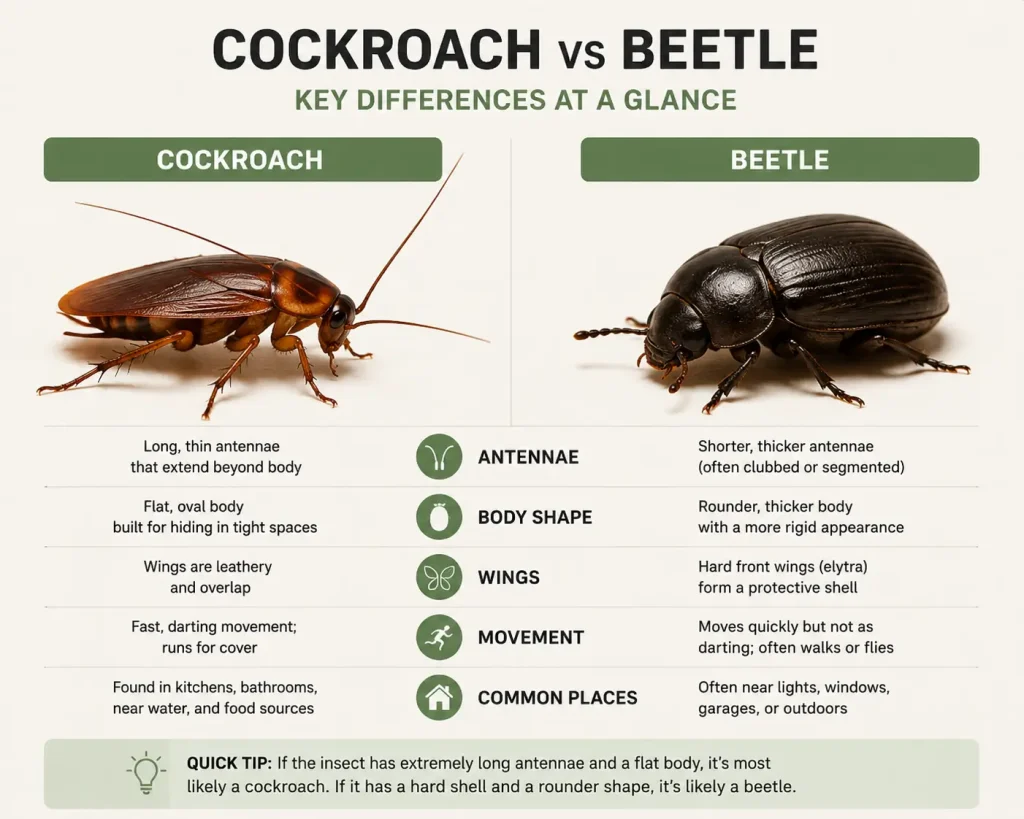
In a cockroach vs beetle comparison, body shape is one of the fastest clues. Cockroaches tend to have flatter, more oval bodies that help them squeeze into cracks and tight spaces. Beetles are usually rounder, thicker, or more rigid-looking.
A cockroach often looks built for hiding. A beetle often looks more armored.
Antennae
Antennae are another quick giveaway. Cockroaches have long, thin antennae that often extend well beyond the body. Beetles usually have shorter, thicker antennae that may look clubbed, segmented, or slightly curved.
Tip: If the antennae look unusually long and whip-like, that leans more toward cockroach than beetle.
Wings and outer covering
Beetles have hard front wings that form a shell-like cover over the body. Those wing covers usually meet in a straight line down the back. Cockroaches do not have that same hard shell. Their wings look more leathery and tend to overlap.
This is one of the clearest ways to tell them apart once you get a close look.
Movement and behavior
Cockroaches are fast, sudden, and built to disappear. Many species run for cover the second a light comes on. Beetles may move quickly too, but they usually don’t have the same flat, darting movement pattern people associate with roaches.
Cockroach or Beetle in House: What the Setting Tells You
Where cockroaches usually show up
When dealing with cockroaches or beetles in the house, location matters. Cockroaches are strongly associated with food, water, and hidden shelter. They tend to show up:
- under sinks
- behind refrigerators
- near drains
- inside cabinets
- in basements, laundry rooms, or utility areas
If the insect is showing up regularly near moisture, crumbs, trash, or dark cracks, it’s likely a cockroach.
Where beetles usually show up
Many beetles end up inside by accident. You may find them:
- near windows
- around porch lights
- in garages
- on floors near entry doors
- on walls trying to get back outside
Some beetles do create indoor problems, especially pantry beetles, carpet beetles, and wood-boring beetles. But many are simply wandering in and do not establish the kind of infestation cockroaches do.
Damage and evidence
A cockroach or beetle infestation in the house leaves different clues depending on the insect.
Cockroaches may leave:
- pepper-like droppings
- smear marks in heavy infestations
- shed skins
- a stale or musty odor in severe cases
Beetles may leave:
- holes in pantry packaging
- damage to fabrics or rugs
- powdery frass near wood
- visible beetle larvae, depending on species
The evidence matters just as much as the insect itself.
Common Cockroach Lookalikes
Why lookalikes matter
A lot of cockroach lookalikes trigger panic even when they are not actually a roach. Even so, that doesn’t mean you should ignore them. Identification matters before you decide how serious the problem is.
Ground beetles
Ground beetles are among the most common cockroach lookalikes. They are dark, fast, and can look roach-like from a distance. The difference is that they are usually outdoor insects that wander inside by mistake. They do not breed in kitchens or hide in wall voids the way cockroaches do.
Click beetles
Click beetles are another common source of confusion. They are long, dark, and can appear suddenly indoors. Some homeowners mistake them for roaches until they notice their bodies are narrower and more rigid.
Water bugs and large roach lookalikes
Some large, dark insects are labeled “water bugs” or “roach-like bugs,” even when they’re not, because people are usually trying to identify an unfamiliar dark insect quickly — not make a scientific distinction.
Beetles That Look Like Roaches
June beetles
Among the most common beetles that look like roaches are June beetles. They are oval, brown, and often drawn to lights. If a large brown bug is bouncing off a porch light or showing up near a screened window, a beetle is often more likely than a cockroach.
Pantry beetles
Some small pantry beetles also look like roaches to the untrained eye. They are much smaller than most roaches, but people often only catch a quick glimpse. If the problem is centered around dry food, grains, flour, or spices, pantry beetles may be the issue.
Other types of beetles that look like cockroaches
Many beetle species can cause confusion, especially when viewed in poor light or from a distance. That is why body shape, antennae, and behavior matter more than color alone.
When to Be Concerned
When it is probably a minor beetle issue
If you find a single beetle near a light, entry door, or garage, it may simply be an outdoor insect that wandered in. That is inconvenient, but not always a larger pest issue.
When it may be a cockroach problem
You should take the situation more seriously if:
- you are finding multiple insects indoors
- they are showing up in kitchens, bathrooms, or around moisture
- they run for cover when lights come on
- you are seeing droppings, shed skins, or repeated activity
If you are unsure whether you are looking at a beetle or a roach, this is the point where professional identification matters.
Why correct identification matters
The treatment for cockroaches differs from that for beetles. A beetle may need exclusion, sanitation, or targeted treatment depending on the type. A cockroach problem usually requires a more urgent, more thorough pest-control response due to the health and infestation risks.
Tip: If you can safely do so, take a clear photo before cleaning up the insect. That makes identification much easier.
FAQs
Q: What is the fastest way to tell a cockroach from a beetle?
A: Check the antennae and body shape first. Cockroaches usually have longer antennae and flatter bodies. Beetles tend to look harder, rounder, and more shell-like.
Q: Are all dark brown bugs in the house cockroaches?
A: No. Many dark beetles, including ground beetles and June beetles, are commonly mistaken for roaches. That is why identification matters before treatment.
Q: Should I worry about one beetle in the house?
A: Not always. A single beetle may have wandered in accidentally. Repeated sightings, pantry activity, or damage to fabric or wood warrant a closer look.
Q: When should I call a pest control professional?
A: Call when you are seeing repeated indoor activity, are unsure what insect you found, or suspect a cockroach infestation. A professional can identify the pest and recommend the right treatment.
Conclusion
Cockroaches and beetles can look similar at first glance, but the difference matters. Some beetles are little more than accidental visitors. Cockroaches are a different kind of problem entirely, especially when they begin to settle into kitchens, bathrooms, basements, or wall voids.
If you are seeing dark bugs indoors and cannot tell whether you are dealing with a roach or one of the many cockroach lookalikes, do not rely on guesswork. Correct identification leads to the right treatment, and the right treatment protects your home.
If you are finding dark bugs indoors and are not sure whether you are dealing with a roach or a beetle, Terminix can help. Schedule a professional inspection and get a clear answer before the problem has time to grow.