The safest way to get rid of wasps depends on the insect, colony size, and nest location. A small, exposed paper wasp nest may sometimes be treated with a pesticide specifically labeled for wasps and hornets, provided it can be reached from the ground, and the label is followed exactly. Underground yellow jacket nests, hidden wall nests, and large aerial hornet nests should generally be handled by a pest control professional because disturbing them can trigger multiple stings.
Prevention is safer than removal. Sealing gaps, managing food and trash, and checking sheltered areas early in the season can make your property less attractive to stinging insects.
Table of Contents
Wasps, Hornets, and Yellow Jackets: Know What You Are Dealing With
These insects have different nesting habits and defensive behavior. Identification helps determine whether a nest can be monitored or needs professional treatment.
Paper Wasps
Paper wasps build open, umbrella-shaped nests beneath eaves, porch ceilings, railings, furniture, and sheds. They usually defend the immediate nest area but are often less reactive elsewhere.
A small nest far from people may not need to be removed because paper wasps also prey on caterpillars and other insects.
Yellow Jackets
Yellow jackets are compact black-and-yellow wasps that often nest underground, inside walls, beneath steps, or in other enclosed spaces. Repeated traffic into one hole or gap is a strong clue.
These colonies can react aggressively when lawn equipment, digging, or foot traffic vibrates the nest area. The visible entrance may also lead to a much larger hidden colony.
Did You Know? A single yellow jacket or bald-faced hornet nest may contain hundreds or even thousands of insects. This means that a small entrance hole or visible nest can conceal a much larger colony, increasing the risk of multiple stings if the nest is disturbed. (Source)
Hornets and “Black Hornets”
Insects called black hornets are often bald-faced hornets. They are technically aerial yellow jackets, with dark bodies and white markings. Their enclosed gray nests are commonly found in trees, shrubs, or on buildings.
European hornets are larger and may nest in tree cavities, attics, sheds, or wall voids.
How to Get Rid of Wasps Safely
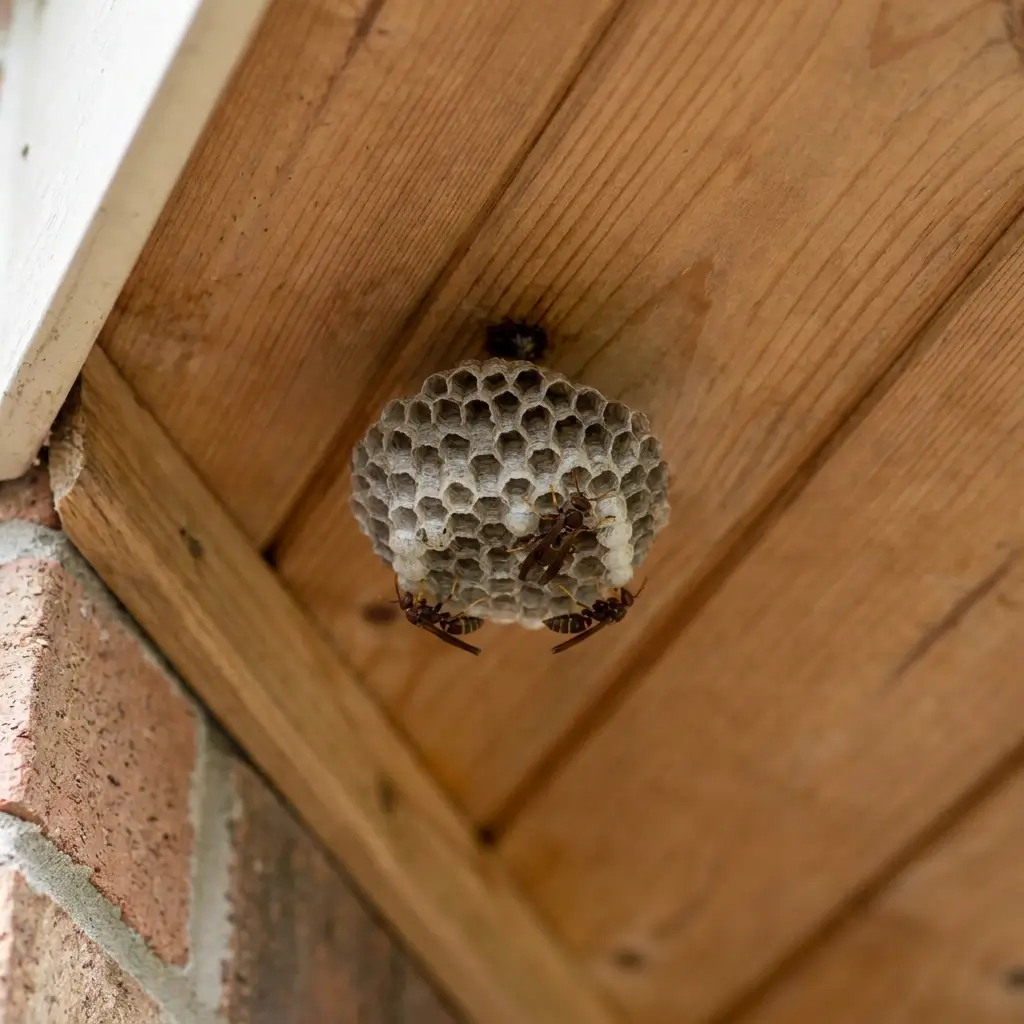
Learning how to get rid of wasps starts with deciding whether you should approach the nest. The lowest-risk DIY situation is a very small, fully exposed paper wasp nest that can be treated without climbing, reaching over obstacles, or standing beneath it.
Check the Nest Location
Observe from a safe distance. Note the entrance, nearby walkways, and whether children, pets, or neighbors could enter the area. Do not proceed if treatment requires a ladder or if the only retreat path passes close to the nest.
Anyone with a sting allergy should avoid the colony and arrange professional service.
Follow the Pesticide Label
For an appropriate small nest, use only a product whose label lists wasps or hornets for that location. Read all protective-equipment, distance, timing, and reentry instructions.
Many labels direct treatment for late evening, when insects are less active. Never use gasoline, fire, bleach, or improvised chemicals.
Confirm the Nest Is Inactive
Don’t remove the nest immediately. Observe it from a safe location and follow the product’s waiting instructions. Continued traffic indicates activity remains, or that another entrance may exist.
Once the colony is inactive and the label permits removal, an exposed nest can be taken down without climbing.
How to Get Rid of a Wasp Nest Without Making It Worse
The visible paper structure is less important than the colony inside it or behind the entrance.
Don’t knock down an active nest, spray it with a hose, strike it with a pole, or place a bag over it. Don’t seal an opening in siding, soffits, or a wall while insects are still entering and leaving. Wasps trapped inside a structural void may search for another route and emerge indoors.
Repeated indoor sightings near one room, fireplace, or light fixture may indicate a concealed nest.
How to Get Rid of Yellow Jacket Wasps
The safest answer to how to get rid of yellow jacket wasps is usually professional treatment, especially for underground or structural nests. Yellow jackets can sting repeatedly, and the colony may extend well beyond the visible entrance.
Avoid Disturbing a Ground Nest
Mark the area from a distance and stop mowing, trimming, digging, or using vibrating equipment nearby. Do not pour water, gasoline, or household chemicals into the hole.
Don’t seal the entrance while the colony is active. Alternate openings may exist, and blocking one route can increase activity elsewhere.
Treat Wall Activity as a Structural Problem
A steady stream of yellow jackets entering siding, a vent, roofline, or utility opening may indicate a nest inside. Spraying or caulking the opening can leave the colony trapped in the structure. A professional can identify the nesting area and determine when exclusion work can begin.
Quick Fact: Not every ground-nesting wasp lives in a large colony. Solitary ground wasps create individual nests, while repeated traffic through one opening is more characteristic of social yellow jackets sharing a single nest. (Source)
How to Kill Hornets and Remove an Aerial Nest
Questions about how to kill hornets or how to get rid of a hornet often arise after a gray nest appears in a tree or beneath a roofline. By the time an aerial nest is easy to see, it may contain a substantial colony.
Don’t approach a large nest from a ladder or break its outer envelope. If it’s above head height, near a doorway or play area, attached to the house, or surrounded by branches, professional removal is safer.
The same guidance applies when researching how to get rid of black hornets. Bald-faced hornets can defend a wide area around the nest, and the elevated location adds a fall risk.
How to Keep Wasps Away From the House
Once an active colony has been addressed, prevention should focus on nesting sites and food sources. No scent, plant, or decoy nest can guarantee that wasps will stay away.
Seal Openings at the Right Time
Repair damaged screens, soffits, vents, weather stripping, and utility gaps. Complete sealing before a colony forms or after confirmed elimination. Never close an opening that still has regular insect traffic.
Manage Food and Trash
Keep outdoor trash and recycling closed. Rinse sticky cans, clean spills, cover food during outdoor meals, avoid leaving pet food outside, and pick up fallen fruit.
Inspect Sheltered Areas Early
Check eaves, porch ceilings, sheds, play structures, grills, and outdoor furniture during spring and early summer. Small starter nests are easier to address than mature colonies. Trim shrubs away from siding and remove debris that provides shelter.
For more seasonal prevention guidance, read Stop Hornets and Wasps Before They Make Your Home Theirs.
Tip: Repeated insect traffic to the same hole, roofline gap, branch, or corner is a stronger sign of a nest than one passing wasp.
When to Call for Professional Wasp Nest Removal
Professional wasp nest removal is appropriate when the nest is underground, inside a wall or attic, elevated, highly active, or close to a door, walkway, deck, play area, or pet run. Call for help if someone has a serious sting allergy, wasps are repeatedly appearing indoors, the insect cannot be identified, or a previous treatment did not stop activity.
A trained technician can identify the species, locate the nest, and choose the appropriate response.
Key Takeaways
- How to get rid of wasps safely depends on the species, nest location, and colony size.
- Small exposed paper wasp nests present less risk than underground, concealed, or elevated nests.
- Yellow jacket nests and large hornet nests are usually better left to professionals.
- Never burn, flood, strike, or prematurely seal an active nest.
- Use pesticides only as the label directs.
- Prevention includes sealing inactive entry points, securing food and trash, and inspecting early.
Frequently Asked Questions
What Should I Do If I Find a Wasp Inside?
Keep people and pets out of the room, close interior doors, and open an exterior window or door if it can be done safely. Repeated sightings may indicate a nest in a wall, attic, vent, or chimney.
Will Wasps Reuse an Old Nest?
Paper wasps, yellow jackets, and bald-faced hornets generally do not reuse the same social nest the next year. New queens may still build nearby if the area continues to provide shelter and food.
Should I Remove an Empty Nest in Winter?
An abandoned exposed nest can usually be removed once you are certain it is inactive. Wear gloves and check surrounding gaps first. A nest inside a wall does not need to be opened solely to remove old paper material.
What Should I Do After a Wasp Sting?
Move away from the nest, wash the area, and apply a cold pack to reduce swelling. Seek emergency help for trouble breathing, swelling of the face or throat, dizziness, widespread hives, or other signs of a severe allergic reaction.
Get Help With an Active Nest
Knowing how to get rid of wasps safely includes recognizing when the nest is beyond a reasonable DIY situation. Underground yellow jackets, concealed wall nests, elevated hornet nests, and colonies near active parts of the property can expose homeowners to repeated stings or falls during removal.
Terminix helps homeowners with stinging-insect identification, treatment, and nest-removal support. Learn about stinging insect control or contact Terminix to request service. You can also call 1-800-284-7911 when a nest is active, difficult to reach, or located where people and pets cannot safely avoid it.