Fleas are tiny pests that can take over a home in no time. Understanding how fleas come into the house helps you stop them before they become a problem. These biting insects reproduce fast, hide in carpets, and make life uncomfortable for people and pets alike. In this article, we go step-by-step through common entry points, how they travel, and what measures truly stop them.
Table of Contents
Common Ways Fleas Come Into Houses
Fleas don’t magically appear. There are clear ways they enter living spaces.
Through Pets
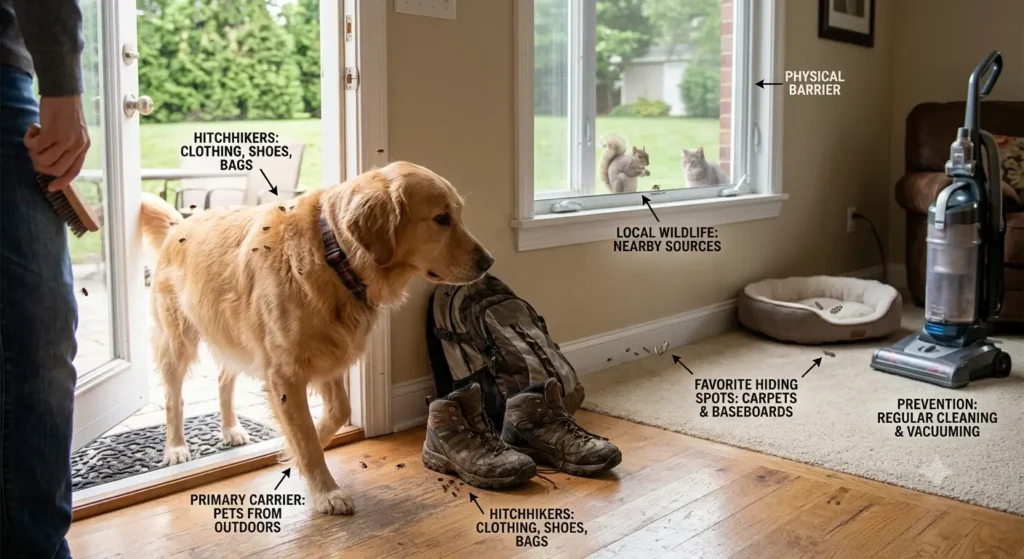
Pets are the most common carriers. Once outside, they pick up fleas from other animals or grass. When your pet comes inside, fleas jump off and start breeding.
On Clothing and Belongings
Fleas can hitch a ride on clothing, bags, or even shoes. If someone visits a home after being near animals or grass, they can bring fleas inside.
Through Wildlife or Other Animals
Stray cats, rodents, raccoons, or birds around your home can be sources of fleas. They don’t need to enter your house — nearby activity is enough.
Can Fleas Be Carried From One Home to Another?
Yes, fleas are excellent travelers. The question many homeowners ask is: can fleas be carried from one house to another? Essentially, yes.
Fleas don’t walk between houses on their own. Instead, they travel through hosts or human activity.
| Mode of Travel | Likelihood | How it Happens |
| Pets | High | Pets pick up fleas outdoors and bring them inside |
| Clothing/Visitors | Medium | People enter after being in flea-prone areas |
| Items from Storage | Low | Secondhand furniture or bedding may harbor flea eggs |
| Wildlife Nearby | Indirect | Animals near the home leave fleas that find their way inside |
Because flea eggs and larvae can be in dormant stages, they may be transferred on objects and hatch later.
Understanding Hitchhiker Fleas
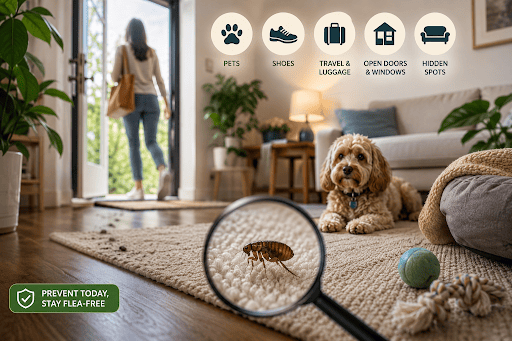
The term hitchhiker fleas refers to fleas that latch onto a host or object and travel without showing themselves. These are not active seekers at first. They remain hidden until conditions are right.
What Makes Them Hitchhikers?
Fleas are small and can cling to fur, fabrics, or tiny fibers in materials. They also lay eggs that fall off later, making it easy for a home to have eggs before you even see adult fleas.
Where Hitchhiker Fleas Hide
Hitchhiker fleas often hide in:
- Folds of clothing
- Suitcases and backpacks
- Rugs and carpet edges
- Pet beds
- Secondhand furniture
A single flea or egg cluster can start a new infestation quickly.
Prevention Tips to Keep Fleas Out
Preventing fleas from entering your home works best when you combine indoor cleanliness with simple outdoor awareness and consistent pet care. Since fleas can easily move between animals, fabrics, and surrounding environments, stopping them early is much easier than dealing with a full infestation. A balanced routine that targets both your living space and your pet’s exposure helps reduce the chances of fleas finding a place to survive and multiply. Keeping fleas out requires a proactive approach like:
- Treat Pets Regularly: Veterinary-approved flea preventatives applied consistently are one of the best defenses. These treatments kill fleas on contact and prevent eggs from hatching.
- Clean and Vacuum Often: Regular vacuuming removes flea eggs and larvae before they mature.
Pro Tip: Vacuum carpets, sofas, and pet areas at least twice a week to reduce flea populations.
- Wash Bedding Frequently: Flea eggs and larvae develop in fabrics. Washing pet and human bedding in hot water removes them.
- Use Screens and Barriers: Installing tight window and door screens limits flea entry by wildlife and maintains a physical barrier.
- Inspect Outdoor Gear: Before bringing items inside after outdoor activities, check them for tiny insects or eggs.
Note: Keeping your yard trimmed and free of organic debris reduces flea habitats.
Flea Behavior and Hidden Hiding Spots
Understanding flea behavior is key to controlling an infestation because these pests don’t stay visible for long and often hide in places you wouldn’t immediately check. Their lifecycle allows them to survive in different stages across your home, which means even if adult fleas are removed, hidden eggs or pupae can restart the infestation later. Knowing where they tend to settle and how they move helps you target the problem more effectively and break their cycle at the source.
Flea Life Stages
Fleas have four stages: egg, larva, pupa, adult. The pupa stage can remain dormant for months until triggered by vibration or warmth.
This means fleas may appear even after initial treatment if pupae were undisturbed.
Favorite Hiding Spots
Fleas and their larvae prefer:
- Dark, protected areas
- Carpet fibers
- Baseboards
- Under furniture
- Pet bedding
- Cracks in flooring
Flea larvae feed on organic debris and flea droppings. This is why regular cleaning disrupts their lifecycle.
How Fleas Move Around
Adult fleas are strong jumpers. They don’t fly but can jump up to 7 inches vertically and 13 inches horizontally.
This is how they move between pets and areas of the home. Over time, fleas that entered one room can soon be found throughout the house.
Quick Fact: A single female flea can lay up to 50 eggs per day and up to 2,000 in her lifetime.
Key Takeaways
- Fleas enter homes mainly through pets, clothing, and nearby wildlife.
- Can fleas be carried from one house to another is true when hosts transport them.
- Flea eggs, larvae, and hitchhiker fleas can hide in carpets and fabrics.
- Regular cleaning, pet treatment, and inspections reduce flea entry and infestation.
- Understanding flea behavior helps interrupt their life cycle before they multiply.
Final Insights
Fleas are persistent, but not unstoppable. Knowing how do fleas come into the house, where they hide, and how they spread gives you a clear advantage. With consistent cleaning, pet care, and mindful habits, you can keep your home flea-free.
FAQs
Can someone bring fleas to your house?
Yes, someone can bring fleas to your house if they’ve been in contact with animals or environments where fleas live. Fleas can cling to clothing or belongings and transfer into your home.
Can you bring fleas home from pets or visitors?
Absolutely. Can you bring fleas home from pets? Yes, especially if pets go outdoors or interact with wildlife. Visitors who spend time around animals may also inadvertently bring fleas inside.
How do fleas come into the house through windows or doors?
Fleas can enter when windows or doors are left open. Even if they don’t crawl in directly, they may jump from grass or animals near these entry points. That’s why households close screens and doors quickly to keep fleas from coming through windows.
How do fleas spread between rooms or homes?
Fleas spread as pets move, as people carry them on clothing, and as larvae or eggs are moved by household activity. Once fleas spread to one part of a house, they can easily travel through carpets and cracks into other areas.
What are hitchhiker fleas, and how to prevent them?
Hitchhiker fleas are fleas that travel into your home unseen on hosts or objects. To prevent them, check items before bringing them indoors, treat pets regularly, and maintain clean indoor surfaces.
If you suspect a flea problem or want professional help, contact a pest control expert today for a customized inspection and treatment plan.