SERVICE REQUEST?
Fill out the form below.
Find our nearest location
Your Local Office

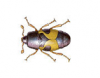
Dried Fruit Beetle
Size:
1/8 of an inch
Color:
Brown with yellow spots on wing covers
Behavior:
The dried fruit beetle belongs to the family Nitidulidae, which contains the sap beetle. It is the most important pest species of this group. These beetles are strong fliers and constantly search for ripe or fermenting fruit. More than 1,000 tiny, white eggs may be deposited by the female on ripening fruit on trees or fruit on trays drying in the open. Infestations, therefore, often begin prior to the fruit being processed or stored in packing sheds. Another source of dried fruit beetles and other sap beetles are refuse dumps where fruit byproducts are disposed. Infestations never occur on whole sound fruits. Fruit is attacked before it is completely dry and usually, only cracked or fermenting fruit is infested. The larvae are white to amber in color and grow to about ¼ inch in length. Development to the pupal stage takes two to four weeks during which the larvae undergo several molts. Each molt results in a cast skin left behind and, together with fecal droppings, infested fruit can be rendered unpalatable by just a few larvae. The life cycle can be completed in a minimum of 15 days during hot weather but may take months during colder months. During their activities, dried fruit beetles may carry yeast cells, fungi and bacteria into the fruit causing it to sour and spoil.
The dried fruit beetle is found worldwide, especially in regions where fruits are grown, processed and stored. It is a prominent pest in California. This beetle attacks both fresh, ripened fruit and dried fruits prior to storage and packaging. This beetle is especially fond of figs and dates and is a common pest of raisins.
The control of any stored product pest involves many steps, primary of which is discovery of infested food items or other sources of infestation (e.g., food spillage accumulation). This beetle will only be associated with moist, fermenting fruits so it is an uncommon pest in homes. Consider the following to prevent an infestation: · Discard infested foods in outdoor trash. Infested decorations (flowers, wreaths, etc.) should also be discarded. · Freeze suspect foods at zero degrees Fahrenheit for six days. · Refrigerate all fruit products and store dried fruit products in a glass or plastic container with a tight lid.
Family Name:
Carpophilus hemipterus
Read What Our Clients
Are Saying
The technician did a thorough job. Very happy
Ronaldo very professional. He explained in detail the service he provided after treating my yard. Iam very happy with the service Robaldo provided.
Ronaldo provides exceptional service. I recommend his customer service
Very thorough and professional!Would like to have him service everyVisit.👍🏻
Incredible customer service. Thorough and professional!

Super friendly and dedicated to quality customer service!
Quenton, is a great technician did a thorough job.
Tech was very professional and was thorough.
Fast, thorough service. Listened to my concerns and addressed them.
Ronaldo (Thomas) was amazing! He goes above and beyond ever service!
Ronaldo Thomas did a great job. Thank you sir for taking your time and not rushing great service
SERVICE REQUEST?
Fill out the form below.