Termites are easy to miss at first. They stay hidden, work quietly, and often leave only small clues behind. Early warning signs of termites are critical because catching activity early can help limit damage, reduce treatment complexity, and give you a clearer path forward.
This guide explains the early warning signs of termites, how to tell if termites are active, what termite swarmers mean, and how to check for termites yourself before the problem gets worse.
The early warning signs of termites often show up before major damage becomes obvious. Common signs include mud tubes along the foundation, hollow-sounding wood, frass near wood surfaces, bubbling paint, stuck doors or windows, and discarded wings from termite swarmers. If you want to know how to tell if termites are active, look for repaired mud tubes, fresh frass, or swarmers indoors. A quick self-check can help, but a professional inspection is the best way to confirm activity and stop damage early.
Table of Contents
Early Warning Signs of Termites Homeowners Often Miss
The first signs are usually small. You may not see insects right away. More often, you notice changes in wood, paint, floors, or windows before you ever see the colony itself.
Mud Tubes Along the Foundation
Mud tubes are one of the clearest signs of termite activity, especially with subterranean termites. These narrow, mud-colored tunnels often appear on foundation walls, slab edges, crawl space supports, and anywhere termites need protected travel between the ground and the wood they are feeding on.
Hollow-Sounding or Soft Wood
Termites eat wood from the inside out. Trim, studs, or flooring may still look normal on the surface while the inside is already weakened.
Tap wood surfaces with the handle of a screwdriver or another hard object. Baseboards, door frames, windowsills, exposed beams, and floor joists are all worth checking. If one area sounds thin or hollow compared with the wood around it, that can point to early termite damage.
Wood that feels soft, splinters easily, or gives slightly under pressure can also be a clue. The damage is not always dramatic at first, which is why these smaller changes matter.
Bubbling Paint, Warped Frames, or Uneven Floors
Paint or drywall that appears to show mild water damage can sometimes indicate termites. You may also notice sticking doors, warped window frames, soft flooring, or bubbling surfaces where the material below has started to weaken.
None of these signs confirms termites on its own, but they become more meaningful when they appear with mud tubes, frass, or swarmers. When several small signs show up together, it is usually time to stop watching and start confirming.
Signs of Termite Activity: Subterranean vs. Drywood
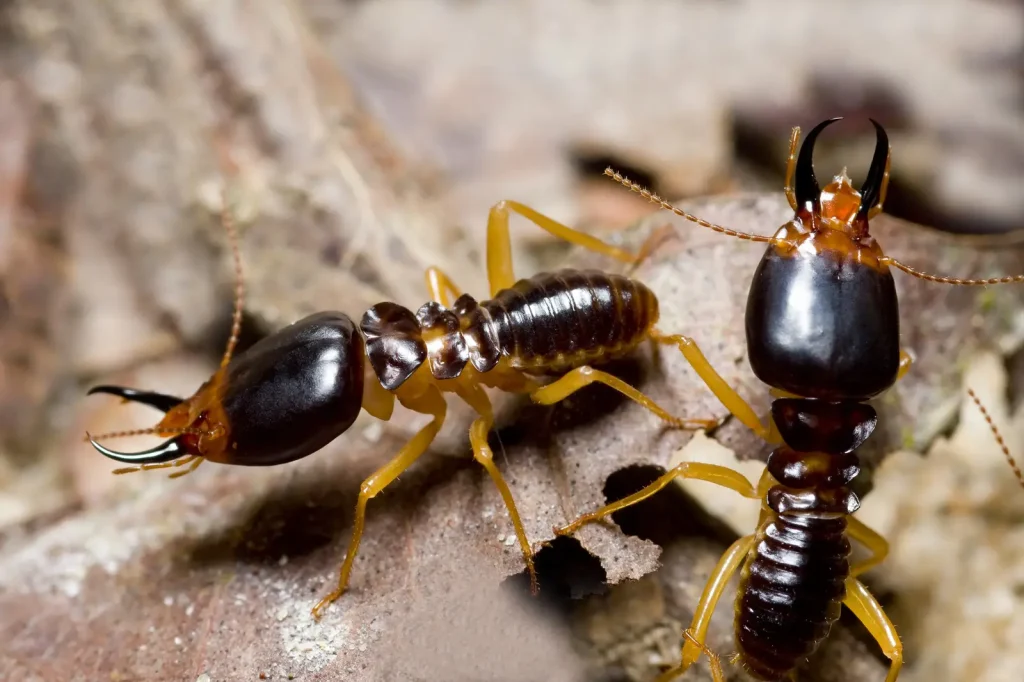
Not all termites leave the same evidence.
Subterranean termites live in the ground and usually leave:
- mud tubes
- hollow structural wood
- moisture-related warping
- damage in crawl spaces, framing, or lower levels of the home
Drywood termites live inside the wood they infest. Their biggest clue is frass. Instead of visible tubes, they stay in the wood and push droppings out through small openings.
If you are trying to figure out how to recognize termites, understanding the difference helps narrow the issue, but species confirmation is still best left to a professional inspection.
How to Recognize Termites in Swarmer Form
For many homeowners, termite swarmers are the first obvious clue that something is wrong. Swarmers are winged reproductive termites that leave a mature colony to start a new one. They are not the termites causing the damage inside the home, but they are a warning that a mature colony is nearby.
If they show up indoors, especially around windows, doors, or light fixtures, that often points to active termite activity in or near the structure. Contact a professional pest control provider to confirm what you’re seeing and determine whether treatment is needed.
What Termite Swarmers Look Like
If you want to know how to recognize termites when they swarm, focus on three features:
- four wings of equal length
- a broad body without a pinched waist
- straight antennae
Termite Swarmers vs. Flying Ants
This is one of the most important distinctions to make during swarm season for termites.
Termite swarmers usually have:
- four wings that are equal in length
- straight antennae
- a more uniform body shape
Flying ants usually have:
- front wings that are longer than the back wings
- bent antennae
- a narrow waist
If you’re unsure, take a few clear photos before cleaning them up and contact a professional pest control provider for help with identification, especially if the insects were found indoors.
Swarm Season for Termites: Why Timing Matters
Swarm season for termites often happens in spring, though timing can vary by species, weather, and region. Warm temperatures and recent rain often increase the chances of seeing swarmers.
A swarm may be brief, and many people miss it entirely. What they find instead are piles of discarded wings near windows, entry points, or light sources.
Finding swarmers outside does not always mean your home is infested. Finding them indoors is more concerning. It usually means the colony is close enough to the home to deserve prompt attention.
How to Tell if Termites Are Active Right Now
If you want to know how to tell if termites are active, a few clues matter more than others:
- A broken mud tube that gets repaired
- Fresh frass appearing again after cleanup
- Live swarmers indoors
- Damage that seems to be spreading
- Several signs showing up in the same area
These are stronger indicators of current activity than old wood damage alone. They suggest the problem is ongoing rather than something that happened months or years ago.
How to Check for Termites Yourself
If you want to know how to check for termites yourself, start with a simple walkthrough using a flashlight.
Outside the Home
Check:
- foundation walls
- slab edges
- crawl space openings
- deck posts
- wood or mulch touching the house
- tree stumps or stored wood near the structure
Inside the Home
Check:
- baseboards
- window frames
- door frames
- flooring edges
- windowsills
- basements or crawl spaces if accessible
Look for mud tubes, frass, discarded wings, bubbling paint, soft spots, and hollow-sounding wood.
A self-check is useful, but it has limits. Termites are often active behind walls, under floors, or in crawl spaces most homeowners never fully inspect. A walkthrough can help you catch obvious signs, but it cannot replace a professional inspection when the signs start to add up.
When to Call a Professional
If you have found mud tubes, fresh frass, swarmers indoors, or hollow-sounding wood, it is time for a professional inspection. The same goes for any situation where several smaller signs appear at once.
A trained technician can look beyond the obvious spots, identify whether the activity is current, and explain what is actually happening in a way that is easier to act on. In many cases, the biggest value of the inspection is not just finding termites but replacing guesswork with a clear recommendation.
A professional can:
- confirm whether termites are active
- identify the likely species
- assess the scope of the issue
- explain treatment options
- help you move from suspicion to a clear plan
If you are seeing early warning signs of termites and are unsure how serious they are, the safest next step is a termite inspection.
FAQs
How can I tell if termites are active right now?
If mud tubes are rebuilt after being broken, frass keeps reappearing, or swarmers show up indoors, those are strong clues that termites are currently active.
What do termite swarmers mean?
Termite swarmers usually mean a mature colony is nearby. If swarmers appear inside your home, that is a stronger warning sign than finding them outdoors.
How do I check for termites myself?
Walk around the outside of your home and inspect the foundation, crawl space access points, decks, and any wood in contact with soil. Inside, check baseboards, windowsills, door frames, and flooring for mud tubes, frass, wings, soft spots, or hollow wood.
What does early termite damage look like?
Early termite damage can show up as blistered paint, soft or hollow wood, warped trim, uneven flooring, and small holes or cracks in wood surfaces.
When is swarm season for termites?
Swarm season for termites often occurs in spring, especially after warm rain, though timing can vary by species and local conditions.
Take the Next Step
Termites usually give small warnings before they cause obvious damage. The challenge is knowing what those warnings look like and acting before the problem grows.
If you have noticed any of the early warning signs of termites, Terminix can help confirm what is going on and recommend the right next step. Schedule a termite inspection and get a clear answer before more damage has time to develop.