A spray can kill the pest in front of you. It may not reach the nest behind the wall, the colony beneath the soil, or the gap that allows pests back inside. That is the key issue in the DIY pest control vs professional debate: quick relief is not always complete control.
DIY methods can help with prevention and very minor activity. Recurring pests, hidden nests, structural threats, and widespread infestations usually need an inspection and a targeted plan.
Table of Contents
Why Homeowners Try DIY Pest Control First
DIY feels fast and affordable. Homeowners can buy sprays, traps, powders, or bait stations without scheduling an appointment. A single line of ants or one roach can also look like an isolated problem.
When can DIY be reasonable?
Do-it-yourself home pest control may suit a correctly identified, minor issue that can be handled safely. Helpful preventive steps include:
- Sealing gaps around doors, windows, pipes, and utility lines
- Storing food in closed containers
- Fixing leaks and removing standing water
- Cleaning crumbs, grease, and pet-food residue
- Using products exactly as the label directs
Pro Tip: Identify the pest before choosing a product. Different species can require different control methods.
The Real Limitations of Do-It-Yourself Home Pest Control
The main weakness of DIY treatment is limited visibility. Homeowners treat where pests appear, but pests often live and breed somewhere else.
Why do pests return after treatment?
A spray may kill insects crossing a counter while leaving the nest untouched. A trap may catch one mouse while others enter through an unsealed opening. This is where pest control do-it-yourself vs professional becomes a question of diagnosis, not just product strength.
DIY attempts often fail because homeowners misidentify the pest, miss hidden spaces, apply products in the wrong place, stop when visible activity drops, or fail to monitor for renewed activity.
Note: More pesticide does not mean better control. The National Pesticide Information Center warns that using more than the label directs can waste money, cause harm, and even reduce effectiveness. Always follow the full product label.
DIY Termite Control vs Professional: Why Termites Are Never a DIY Job
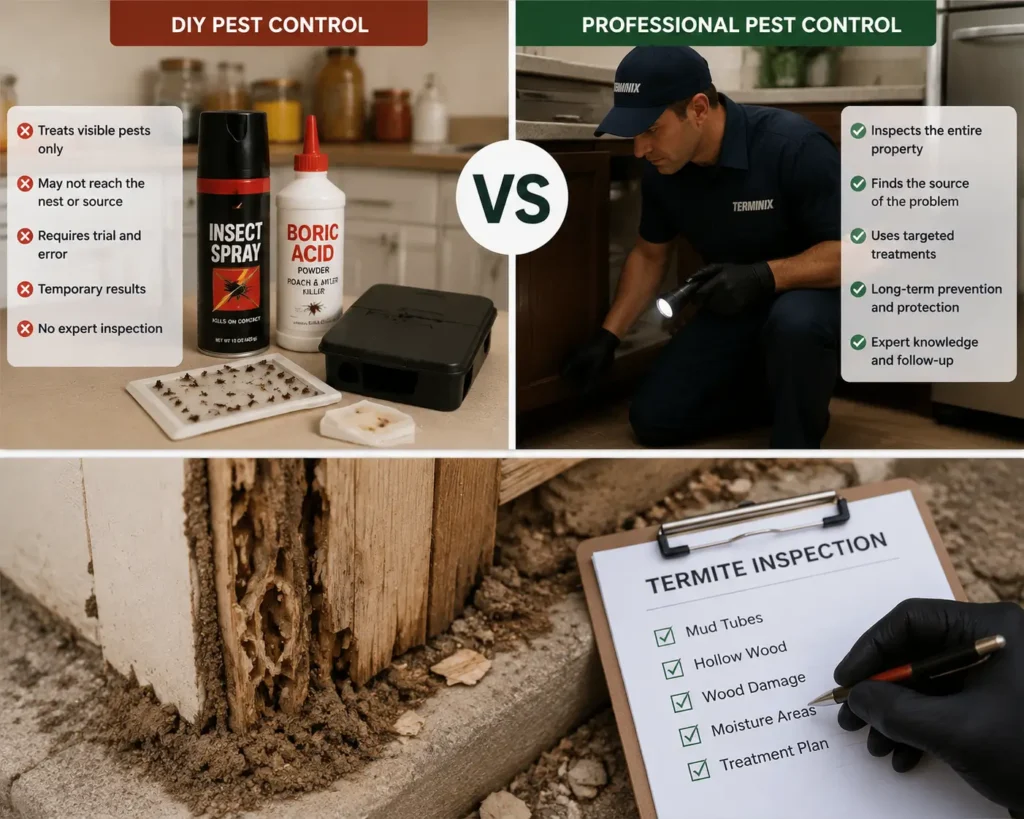
Termites can remain hidden in soil, wood, crawl spaces, foundations, and walls while damage continues out of view.
Why can surface treatment miss termites?
A homeowner may treat visible swarmers, mud tubes, or damaged wood. The active colony may extend far beyond that area. The DIY termite control vs professional decision must consider species, colony location, building design, moisture, and possible structural damage.
Professional service may include inspection, risk assessment, a property-specific treatment plan, and monitoring. The selected method depends on the infestation and structure.
Quick Fact: The U.S. Environmental Protection Agency reports that termites cause billions of dollars in structural damage each year, while property owners spend more than $2 billion on treatment.
Do not test several store-bought products while hidden damage may continue. Schedule professional termite inspection and treatment when you find swarmers, discarded wings, mud tubes, or suspicious wood damage.
DIY Pest Control vs Professional Services: Head-to-Head Comparison
A direct comparison shows why the first purchase price does not tell the full story.
| Factor | DIY Approach | Professional Service |
| Best for | Prevention or minor activity | Recurring, hidden, or widespread activity |
| Identification | Homeowner observation | Inspection and pest-specific knowledge |
| Treatment area | Usually visible spaces | Activity zones, entry points, and nesting areas |
| Prevention | Depends on homeowner follow-through | May include monitoring and exclusion guidance |
| Time required | Research, application, and repeat attempts | Scheduled inspection, treatment, and follow-up |
| Main risk | Missing the source or using the wrong method | Higher upfront cost |
| Expected result | Often temporary for infestations | Broader control and prevention plan |
Which option provides more reliable control?
In the DIY pest control vs professional services comparison, professionals have an advantage when pests reproduce quickly, reach hidden spaces, create health concerns, or threaten the structure. DIY remains useful for sanitation, exclusion, and basic prevention.
Do You Know? Integrated Pest Management, or IPM, combines identification, monitoring, prevention, habitat changes, and targeted treatments. The EPA describes it as a practical way to manage pests while reducing unnecessary risk to people, property, and the environment.
What Professional Pest Control Actually Includes
Professional service should do more than apply a product. It begins by determining what is happening and why.
What happens during a professional visit?
A trained technician may:
- Inspect activity, entry points, nesting areas, moisture, and attractants.
- Identify the pest before recommending treatment.
- Match treatment to the pest, severity, and property layout.
- Recommend sealing, sanitation, storage, or moisture corrections.
- Monitor results or schedule follow-up when needed.
Terminix residential pest control plans include inspection, customized treatment, ongoing protection, and re-service terms based on the selected plan.
That is the practical difference in DIY pest control vs professional care. Professional value includes pest knowledge, inspection time, treatment planning, and a clear next step if activity continues.
The Real Cost – DIY vs Professional Over Time
DIY usually wins on the first receipt. It may lose when the pest returns.
What belongs in the true cost calculation?
A fair pest control do it yourself vs professional comparison should include repeat products, replacement traps, protective equipment, research time, damaged belongings, repairs, and professional treatment after failed attempts.
A low-cost product is economical only when it solves the correct problem. Several purchases and weeks of continued activity can quickly change the total.
Moisture can also support recurring pest activity. Treating insects without addressing damp crawl-space conditions may give short-term results. Terminix provides moisture control services for conditions linked to termites, roaches, rodents, and wood-decaying fungus. (Terminix)
When You Should Always Call a Professional
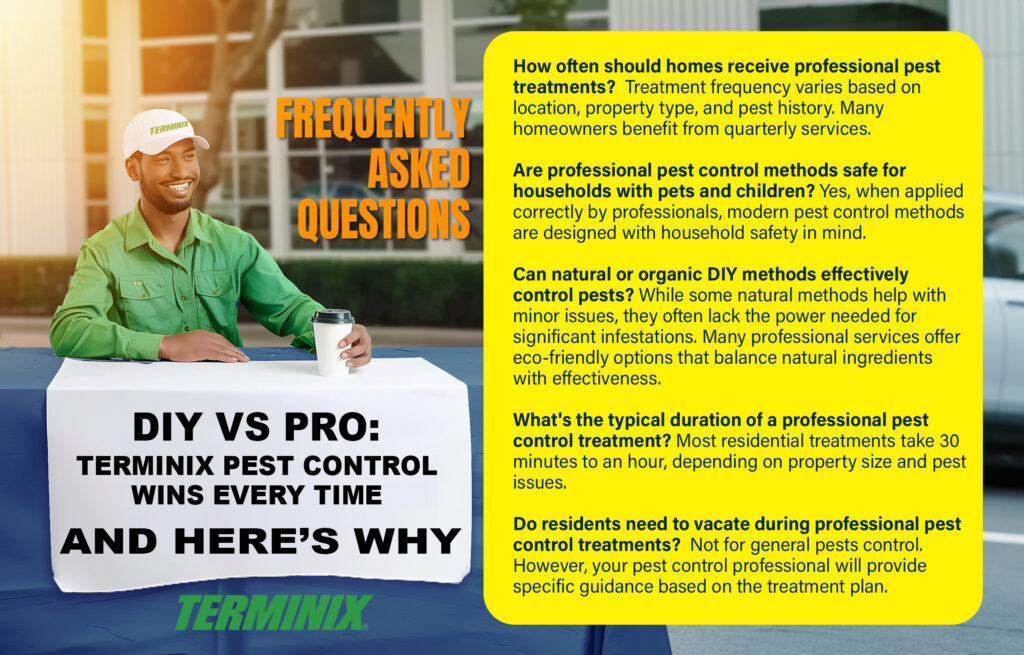
Some situations carry too much risk for trial and error. Call a professional when you notice:
- Termite swarmers, mud tubes, hollow wood, or structural damage
- Bed bugs, repeated bites, shed skins, or spotting near beds
- A wasp or hornet nest near occupied areas
- Rats, several mice, nesting material, or widespread droppings
- Roaches appearing during the day or across several rooms
- Recurring pests after two correctly applied treatments
- Activity inside walls, ceilings, attics, or crawl spaces
- Uncertainty about pesticide use around children or pets
For repeated rodent signs, a professional rodent control service can address activity and access points. Heavy outdoor mosquito pressure may also require targeted mosquito control.
Key Takeaways
- DIY works best for prevention and small, clearly identified problems.
- Repeated sightings often mean the source remains active.
- Termites, bed bugs, stinging nests, and established rodent activity need professional help.
- Professional service includes identification, treatment, prevention, and follow-up.
Final Verdict: Choose the Fix That Reaches the Source
The choice between DIY and professional services does not mean every insect needs a service call. Prevention, cleaning, sealing, and careful use of labeled products all have a place.
The dividing line is risk. When pests are recurring, hidden, destructive, hazardous, or difficult to identify, professional service offers a more complete path. It addresses where pests live, how they entered, and what could bring them back.
FAQ’s
These quick answers can help homeowners choose the right response before a minor pest issue becomes a larger infestation.
Is DIY pest control as effective as professional pest control?
DIY may work for a single pest, light activity, or preventive maintenance. It is less reliable for colonies, hidden infestations, recurring activity, or pests that need specialized treatment.
What is the main difference between DIY and professional pest control?
Do-it-yourself home pest control places identification, application, and monitoring on the homeowner. Professional service adds trained inspection, pest-specific planning, prevention guidance, and follow-up options.
Is DIY termite treatment worth trying first?
No. The possibility of hidden activity and structural damage makes DIY termite control vs professional treatment a high-risk comparison. Arrange an inspection as soon as you notice warning signs.
Why do pests return after store-bought treatment?
The product may kill visible pests without reaching the nest, breeding area, or entry point. Food, water, shelter, moisture, and structural gaps may also remain available.
How should I choose between the two options?
Use DIY for prevention and a minor, clearly identified issue that can be handled safely. Choose professional help when activity repeats, the source is hidden, or the pest may damage health or property.
Stop Repeat Pest Problems Before They Spread
Pest problems rarely become easier with time. Contact Terminix to schedule an inspection and receive a treatment plan based on your home, the pest, and the level of activity.