September and October are the best months to get ahead of pest problems. As temperatures shift, many pests begin looking for warmth, moisture, food, and shelter. A smart fall pest prevention checklist helps you close those gaps before pests settle in for the season.
For homeowners in Eastern NC and Hampton Roads, VA, fall does not mean pest activity stops. It means pest behavior changes. These fall pest control tips can help you protect your home before rodents, roaches, spiders, stink bugs, and other occasional invaders move indoors.
Use this pest prevention checklist as a practical guide for sealing entry points, reducing attractants, checking high-risk areas, and knowing when to call a professional.
Table of Contents
How to Pest-Proof Your Home Before Winter — Why Timing Matters
Pests do not wait until winter to look for shelter. Many start moving toward homes as soon as nights get cooler and outdoor food sources become harder to find.
The goal is simple: a pest-proof home for winter before pests find easy access. Once rodents or insects get inside walls, attics, crawl spaces, or storage areas, the problem can become harder to control.
A seasonal pest control checklist should start outside the home and move inward. Focus on the places where pests enter first.
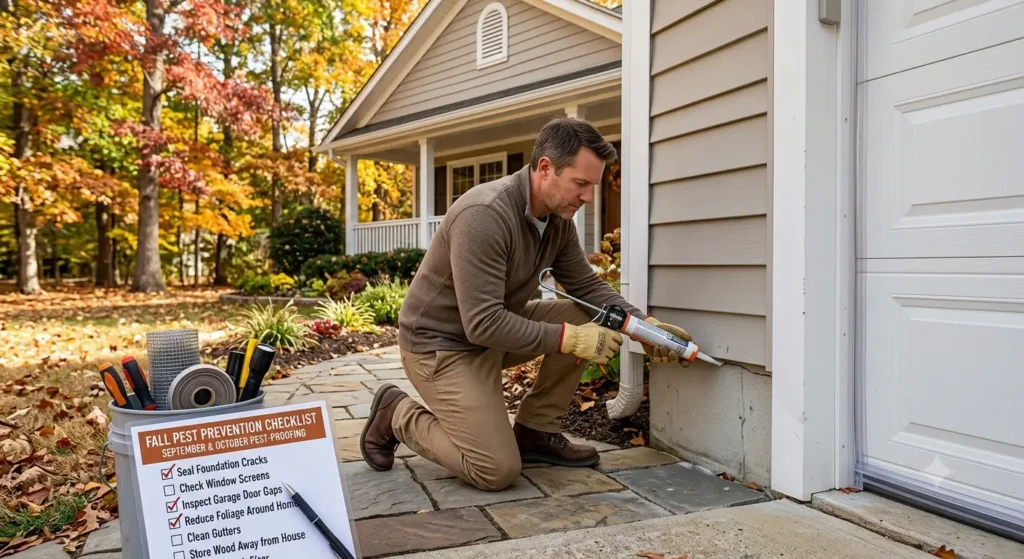
Check these areas in September and October:
- Gaps around doors and windows
- Torn window screens
- Openings around pipes and utility lines
- Foundation cracks
- Crawl space vents
- Garage door gaps
- Attic vents
- Loose weatherstripping
- Unsealed food storage
- Leaky sinks or damp crawl spaces
Note: A fall pest control treatment is most effective when paired with home maintenance. Treatment helps reduce pest pressure, while sealing and cleanup help remove the reasons pests enter.
Fall Pest Control for Eastern NC & Hampton Roads, VA, Homeowners
Homes in Eastern NC and Hampton Roads VA face long pest seasons because the climate stays warm and humid for much of the year. Moisture, wooded areas, crawl spaces, and coastal conditions can all create pest pressure around homes.
A seasonal pest control checklist should reflect local conditions. In this region, homeowners should pay close attention to moisture, standing water, shaded areas, and crawl spaces.
Common fall pest concerns may include:
- House mice and rats
- Cockroaches
- Spiders
- Ants
- Fleas and ticks
- Stink bugs
- Silverfish
- Pantry pests
- Termites
- Occasional invaders
For many homes, fall pest control treatment works best before pests become visible indoors. Preventive service can help reduce pest activity around the exterior, target hiding areas, and identify conditions that may attract insects or rodents.
Pro Tip: Pair pest control tips with professional inspection. You may notice obvious issues like crumbs, leaves, or gaps under doors, but a trained technician can identify hidden entry points, moisture issues, and pest signs you may miss.
DIY Pest-Proofing vs. Professional Inspection — What’s the Difference?
DIY pest-proofing can help homeowners reduce common pest attractants before fall problems begin. Simple steps like sealing visible gaps, cleaning food areas, removing trash, and fixing obvious leaks all support a stronger prevention routine. However, DIY efforts have limits. Pests often hide in crawl spaces, rooflines, vents, utility openings, and moisture-prone areas that are easy to miss without a trained eye. That is where a professional inspection makes a difference.
| Area | DIY Pest-Proofing | Professional Inspection |
| Entry points | Seal visible cracks, gaps, and door openings | Identify hidden access points around vents, crawl spaces, rooflines, and utilities |
| Food sources | Store food, clean crumbs, and remove trash | Look for pest trails, nesting signs, and activity near storage areas |
| Moisture | Fix visible leaks and reduce standing water | Check crawl spaces, drainage issues, humidity, and pest-friendly conditions |
| Rodents | Look for droppings and noises | Identify species, nesting areas, entry points, and damage |
| Treatment | Limited to basic prevention products | Customized fall pest control treatment based on pest type and property risk |
DIY supports your fall pest prevention checklist, but it should not replace a trained inspection when pests are active or when signs keep returning.
A professional visit helps answer bigger questions:
- Where are pests entering?
- Are there nesting areas?
- Is moisture attracting insects or rodents?
- Are treatments needed indoors, outdoors, or both?
- What prevention plan fits the home?
Do You Know? A pest control checklist can miss crawl space problems. Moist crawl spaces can attract insects, rodents, termites, and wood-decaying fungus.
How to Keep Rodents Out of Your House This Fall
Rodents are one of the biggest fall pest concerns because they actively look for warmth and shelter. Attics, crawl spaces, garages, kitchens, and wall voids can become nesting areas.
If your goal is a pest-proof home for winter, rodent prevention should be near the top of your list.
Start with these steps:
- Seal holes around pipes and utility lines.
- Add door sweeps to exterior doors.
- Repair damaged garage door seals.
- Store pet food in sealed containers.
- Keep birdseed and grass seed in sealed bins.
- Remove cardboard clutter from garages and attics.
- Trim branches away from the roofline.
- Keep trash cans tightly closed.
- Check for droppings, gnaw marks, and scratching sounds.
These are practical fall pest control tips because they remove what rodents need most: access, food, and shelter.
Signs you may already have a rodent problem include:
- Small dark droppings
- Scratching noises at night
- Chewed food packaging
- Gnaw marks on wood or wires
- Shredded paper or fabric
- Grease marks along the walls
- Unusual pet behavior near cabinets or walls
If you notice these signs, schedule a rodent inspection before the issue spreads.
Fall Pest Prevention Tips for Your Yard and Outdoor Spaces
Your yard can either support your fall pest prevention checklist or work against it. Pests often begin outside, then move closer to the home as conditions change.
Clogged gutters can also attract pests. When leaves, twigs, and moisture build up, gutters can become a shelter and breeding ground for insects, ants, mosquitoes, roaches, and even rodents seeking water and nesting sites. Keeping gutters clean helps reduce moisture around the roofline and foundation, making your home less inviting to pests before they move indoors.
Start with the areas closest to your foundation.
Outdoor prevention steps:
- Move firewood away from the house.
- Trim shrubs and branches touching the home.
- Clean leaves from gutters.
- Remove leaf piles near the foundation.
- Empty standing water from containers.
- Keep mulch away from siding.
- Repair damaged screens.
- Store outdoor cushions and décor in sealed containers.
- Keep trash and recycling bins closed.
- Check outdoor lights that attract flying insects.
Use these tips before holiday storage boxes, fall décor, and outdoor items come indoors. Inspect anything stored in sheds, garages, or patios before bringing it inside.
A fall pest control treatment can also help reduce exterior pest pressure around the home. This matters because many pests first gather near windows, doors, crawl space openings, and shaded foundation areas before they move inside.
Before Winter Arrives
The best way to pest-proof a home for winter is to start before pests become a daily problem. Once rodents, roaches, spiders, or occasional invaders are inside, control becomes more difficult.
A fall pest prevention checklist gives you a clear plan. Seal the home. Reduce moisture. Remove clutter. Store food properly. Inspect outdoor spaces. Then bring in professional help when pest activity, rodent signs, or recurring issues appear.
Key Takeaways
- Start pest-proofing in September or October, before cold weather settles in.
- Use a seasonal pest control checklist that covers entry points, food, water, storage, and outdoor spaces.
- Seal exterior openings around doors, windows, pipes, vents, and crawl spaces.
- Schedule pest control treatment if you see recurring pests, rodent signs, or moisture issues.
- To pest-proof your home for winter, combine DIY cleanup with professional inspection and prevention.
Frequently Asked Questions About Fall Pest Control
1. When should I start pest-proofing my home for fall?
Start in September or early October. This gives you time to inspect, seal, clean, and schedule service before pests begin moving indoors in larger numbers. A seasonal pest control checklist works best when it is completed before cold nights become consistent.
2. What pests are most common in homes during fall?
Common fall pests include mice, rats, cockroaches, spiders, stink bugs, ants, silverfish, pantry pests, and occasional invaders. In Eastern NC and Hampton Roads, VA, moisture and mild weather can also keep pests active longer than expected.
3. How do I keep stink bugs out of my house in the fall?
Seal cracks around windows, doors, siding, vents, and utility lines. Repair screens and avoid crushing stink bugs indoors because they can release an unpleasant odor. Vacuuming is usually better for small indoor sightings. These fall pest control tips work best before stink bugs gather on sunny exterior walls.
4. Can mice enter through very small holes?
Yes. Mice can enter through very small openings. That is why gaps around pipes, garage doors, foundation cracks, and utility lines should be sealed before temperatures drop. If you hear scratching or find droppings, schedule a rodent inspection.
5. Is fall pest control worth it?
Yes. A pest control treatment can help stop pest issues before they grow. It is especially valuable if you have seen rodents, roaches, spiders, ants, or moisture-related pests around your home. Preventive service can also help identify risk areas before winter.
Use this checklist to protect your home before pests move inside. If you are seeing pest activity or want help finding risk areas, schedule service with Terminix®.
Call 1-800-284-7911 or visit Terminix® to request help from your local pest control team in Eastern NC or Hampton Roads VA.