Clogged gutters are more than just a messy nuisance — they create the perfect breeding ground for bugs that can invade your home, spread disease, and even damage your property. In fact, studies show that clogged gutters are responsible for pests in gutters entering nearly 40% of homes in the Eastern NC and Hampton Roads VA regions. The combination of seasonal rainfall, high humidity, and abundant foliage makes gutters a prime breeding ground for mosquitoes, cockroaches, wasps, and more. Ignoring gutter maintenance can lead to structural damage, costly repairs, and unwanted infestations.
When picturing pests invading your home, most people think of them sneaking in through windows or doors. However, gutters are often overlooked—but they provide an ideal environment for insects in clogged gutters to thrive. Standing water, debris, and sheltered spaces make gutters a perfect hiding spot, allowing mosquitoes, cockroaches, wasps, and more to establish themselves close to your home before making their way inside.
Table of Contents
Common Pests in Gutters
Here are some of the common kinds of pests that could be hiding in your gutters:
Mosquitoes
Gutters with as little as ½ inch of standing water are enough for mosquito breeding in gutters. Eggs hatch in 7–10 days, and populations can explode quickly. Eastern NC and Hampton Roads VA homeowners often notice increased mosquito activity during the summer months. Watch for larvae wriggling in water, and be aware that mosquitoes can carry diseases like West Nile virus and Zika.
Bees and Wasps
Bees and wasps in gutters are drawn to the sheltered environment of gutters, particularly downspout openings. Paper wasps and yellow jackets frequently build nests here. Signs include buzzing near downspouts or visible nests tucked beneath leaves and fascia boards. Wasps can sting when disturbed, and nests left unchecked may expand into nearby eaves.
Cockroaches
American cockroaches (commonly called palmetto bugs) thrive in damp, dark gutters filled with organic debris. Homeowners often ask, “How do roaches get into a house from outside?” They migrate indoors through soffit vents and roofline gaps. Look for droppings along gutters or increased roach sightings inside after rainfall. These pests can contaminate surfaces and carry bacteria that trigger allergies.
Ants
Different ant species exploit gutters differently. Carpenter ants seek moisture-damaged wood along fascia boards, causing structural harm, while odorous house ants migrate indoors to access food sources. Check for ant trails along gutters and inside your home, particularly during wetter months.
Termites
Subterranean termites exploit moisture from dripping gutters onto fascia boards. Signs include mud tubes along the roofline or soft, damaged wood. Once established, termites can compromise the structural integrity of your home.
Additional Pests to Watch
- Spiders: Black widow and brown recluse spiders find shelter among leaves and debris. A bug-rich environment in gutters sustains their prey.
- Rodents (mice/rats): Debris-filled gutters provide nesting spots. Rodents chew through soffits to access attics, leaving droppings and gnawed wood.
- Birds (pigeons, starlings): Nesting in gutters can cause blockages, attract insects, and spread histoplasmosis through droppings.
- Earwigs & Silverfish: Moist leaf litter and shaded areas create ideal breeding grounds. These pests migrate indoors in search of food.
Why Clogged Gutters Attract Pests
Clogged gutters create a perfect storm of conditions for gutter bugs:
- Standing water: Breeding ground for mosquitoes; hydration source for cockroaches.
- Decomposing leaf debris: Food for cockroaches, fungus gnats, and earwigs.
- Overflowing water: Moist wood attracts termites and carpenter ants.
- Sheltered space: Ideal nesting site for wasps, birds, and rodents.
These are clear signs of pests in gutters that should not be ignored.
Warning Signs of Pests in Gutters
- Mud tubes or soft wood along the roofline (termites)
- Buzzing near downspouts or under eaves (wasps/bees)
- Scratching sounds in walls or attic near roofline (rodents, birds)
- Increased indoor insect activity after rain (cockroaches, ants)
- Visible droppings or nest material in gutters
- Sagging gutters or water damage to fascia (moisture issues = termite risk)
DIY Gutter Maintenance Schedule
Keeping gutters clean prevents pests from taking hold. Here’s a seasonal guide:
- Spring: Clear winter debris, inspect downspouts, check fascia for moisture.
- Summer: Monitor for wasp and bird nests, flush gutters after storms.
- Fall: Critical — remove leaves before heavy rains, ensure drainage.
- Anytime: Downspouts should discharge water at least 6 ft from the foundation.
DIY is the baseline; pairing with Terminix gutter guards and professional inspection offers long-term protection.
How Pests Use Gutters to Enter Your Home
Your gutters are more than just water channels—they can serve as a direct pathway for pests in gutters to access your home.
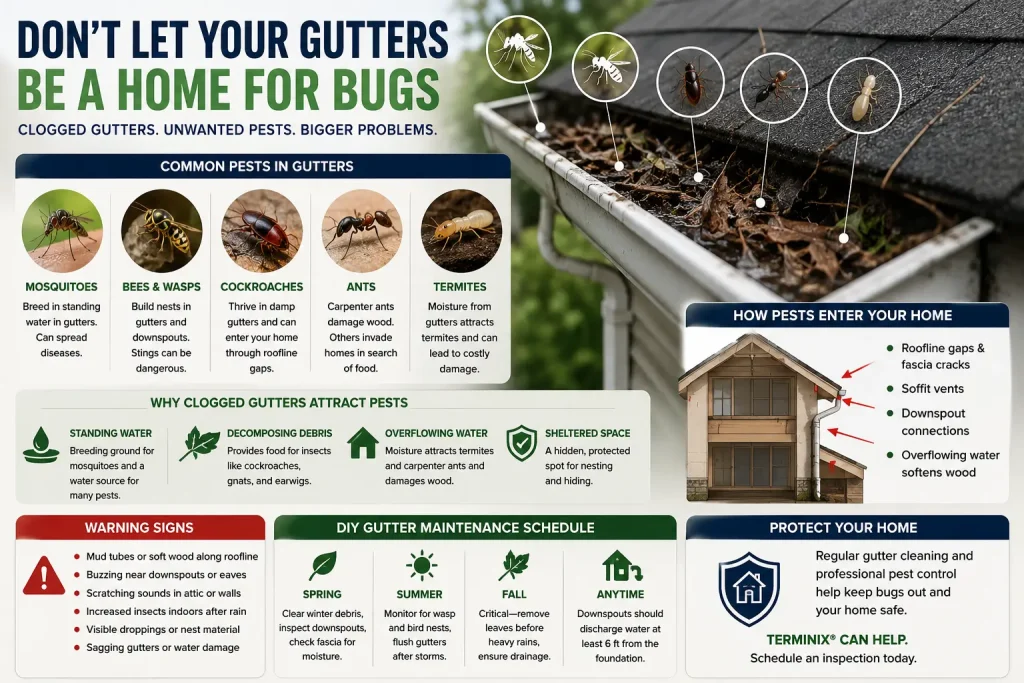
- Roofline gaps & fascia cracks: Entry for termites and ants.
- Soffit vents: Pathway for cockroaches and rodents.
- Downspout connections: Lead to crawlspaces and basements.
- Overflowing water: Softens wood and opens routes for insects and termites.
Each pathway ties back to the relevant pest, highlighting the urgency of regular maintenance.
Regular gutter maintenance and cleaning can help prevent these unwelcome guests from infiltrating your home. For long term solutions, Terminix offers gutter protection services to ensure your gutters are in good condition and free from any potential pest issues. We’ll come to your home and perform a thorough inspection to determine the right gutter guards for you, then custom install them for a clean, professional look. With long-term pest control and prevention solutions, you can be sure that your home is protected from any unwanted guests.
Key Takeaways
- Clogged gutters attract pests: Standing water, debris, and sheltered spaces make gutters a prime breeding ground for mosquitoes, cockroaches, wasps, and more.
- Early warning signs matter: Listen for noises, check for droppings, stains, or bats emerging at dusk; inspect insulation for contamination.
- Entry points create risks: Roofline gaps, downspouts, soffits, and fascia cracks allow pests to enter your home.
- Preventive maintenance is effective: Regular cleaning, proper drainage, gutter guards, and trimming nearby trees reduce infestations naturally.
- Professional solutions provide long-term protection: Terminix offers inspections, customized gutter guard installation, and ongoing prevention to keep homes pest-free.
Final Words
Clogged gutters aren’t just a cosmetic issue—they are a potential gateway for bugs in gutters to infiltrate your home, cause structural damage, and spread disease. By recognizing infestation signs, performing regular maintenance, and using professional services like Terminix gutter guards, homeowners in Eastern NC and Hampton Roads VA can protect their property, improve safety, and prevent costly pest problems.
FAQs
Can bugs live in gutters?
Yes. Standing water, debris, and shelter make gutters ideal habitats for mosquitoes, cockroaches, ants, and more.
Do gutter guards prevent insects?
Gutter guards reduce water and debris accumulation, making gutters less hospitable for pests, though not a complete solution.
What bugs are attracted to clogged gutters?
Mosquitoes, termites, cockroaches, wasps, spiders, rodents, birds, earwigs, and silverfish.
Can cockroaches come through gutters into my house?
Yes, particularly American cockroaches. They enter via roofline gaps and soffit vents after rainfall or flooding.
Which types of debris in gutters attract the most pests?
Leaves, pine needles, and moss create a moist, sheltered environment that attracts mosquitoes, cockroaches, ants, and spiders. Decomposing plant matter also serves as a food source for fungus gnats and earwigs.
Can birds nesting in gutters lead to other pest infestations?
Yes. Birds like pigeons or starlings bring parasites such as mites and attract insects to feed on their droppings, increasing overall pest activity around your home.
Are certain gutter materials more prone to pest problems?
Wood gutters can retain more moisture and decay faster, attracting termites and carpenter ants. Aluminum and vinyl gutters are less hospitable but can still harbor pests if clogged with debris.
How does standing water in gutters affect pest populations seasonally?
Even small amounts of standing water allow mosquitoes to breed during warm months. Seasonal rainfall in Eastern NC and Hampton Roads VA creates repeated opportunities for pests to reproduce quickly.
Can nearby trees increase pest problems in gutters?
Absolutely. Overhanging branches drop leaves, pollen, and seeds into gutters, providing food and shelter for insects and encouraging bird and rodent activity nearby.
How quickly can pests spread from gutters into the home?
Depending on conditions, pests like cockroaches or ants can move from gutters into your attic or crawlspace within a few days after a heavy rain or when debris creates a continuous pathway.
Do gutter slope and drainage affect pest infestations?
Poorly sloped or clogged gutters allow water to pool, making it easier for mosquitoes and other water-dependent pests to thrive. Proper drainage reduces moisture and discourages nesting.
Can you prevent pests without using chemicals?
Yes. Regular gutter cleaning, installing gutter guards, trimming nearby trees, and ensuring proper drainage can greatly reduce pest activity naturally, minimizing chemical use.
How do nocturnal pests use gutters at night?
Pests like rodents, spiders, and some insects are more active at night. They use the shelter of debris and darkness in gutters to travel safely and forage for food without detection.
Can pest infestations in gutters affect landscaping?
Yes. Overflowing gutters can spread pest-attracting moisture into garden beds, promote fungal growth, and attract insects that damage plants and flowers.
Don’t let pests use your gutters to gain access to your home – contact Terminix today to schedule a free gutter inspection and get up to 10% off service!