Pest prevention can feel confusing with all the misinformation out there. Many homeowners fall for common pest control myths that waste time, money, and energy. In this guide, we’ll explore the truth behind popular misconceptions with clear pest control information and facts you can trust. Understanding real solutions helps you protect your home and family more effectively.
Table of Contents
Myth: One Treatment Is Enough to Get Rid of Pests
Many believe a single pest treatment solves every problem forever. That’s not accurate.
Pests are opportunistic. A one‑time visit can reduce visible activity, but lasting results require ongoing care.
Why One Visit Often Fails
A single treatment can:
- Reduce pest numbers temporarily.
- Target only visible insects or rodents.
- Miss hidden nests or breeding sites.
To truly prevent recurrence, professionals often recommend follow‑up visits, especially for species such as ants, termites, cockroaches, and rodents.
How Professionals Approach Treatment
Pest pros focus on:
- Inspection to find entry points.
- Customized plans based on infestation level.
- Multiple visits are needed for lasting control.
This reflects industry standards and pest control industry facts showing that repeated treatments reduce almost all pest activity over time.
Note: Quick fixes rarely work long-term. Persistent monitoring and adjustments matter.
Myth: Pest Control Chemicals Are Dangerous to My Family and Pets
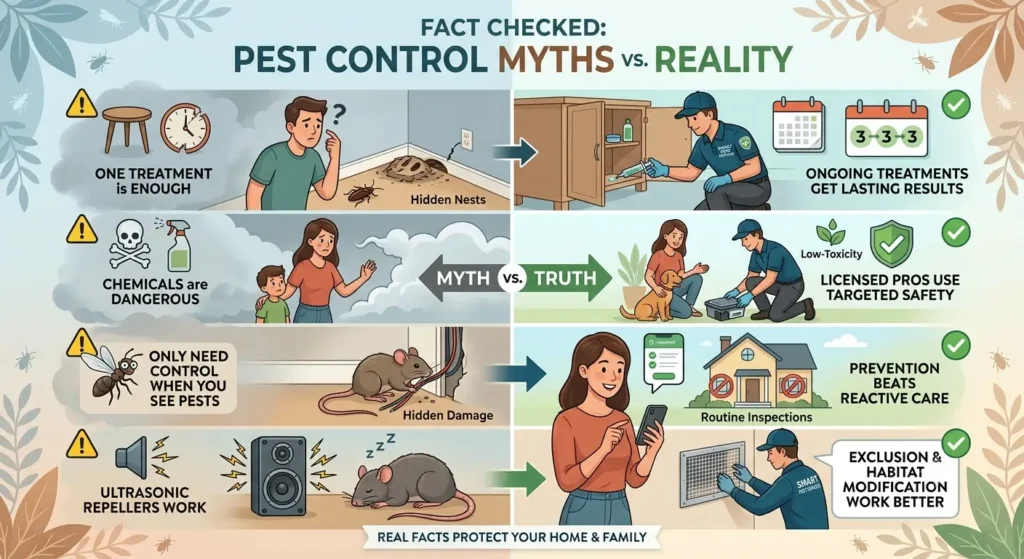
A major concern is chemical safety. Some DIY products can be hazardous if misused, but professional pest control uses regulated, targeted applications that prioritise safety.
What Professionals Use
Licensed technicians apply:
- Low-toxicity formulations designed for specific pests.
- Treatments placed where humans and pets won’t contact them.
- Baits, traps, and barriers instead of broad sprays when possible.
These practices are rooted in pest control information and facts that emphasise safety.
Misunderstandings About Chemical Use
Many think “chemical” means harmful. In reality:
- Dosages matter.
- Placement matters.
- Professional application reduces exposure risk.
Properly applied treatments minimise risk while maximising effectiveness. Home remedies or overuse of store products can be more hazardous.
Pro Tip: Always follow label instructions. Never apply products indoors or near children and pets without reading directions.
Myth: You Only Need Pest Control When You See Pests
Seeing pests often means the problem is already advanced. By the time you notice activity, infestations can be widespread.
Why Waiting Hurts
Pests like termites, bed bugs, and rodents reproduce quickly. A delay in action can lead to:
- Greater property damage.
- More difficult eradication.
- Higher treatment costs.
Early detection and prevention are key components of staying ahead of pest problems.
Preventive Pest Care
Effective pest control isn’t only reactive. It includes:
- Routine inspections.
- Seasonal treatments.
- Maintenance of exclusion barriers.
- Habitat modification.
These steps align with pest control facts that proactive measures deliver better outcomes than waiting for a crisis.
Key Takeaways
- Common pest control myths often lead homeowners astray. Truth is rooted in science and practice.
- One treatment is rarely enough. Long‑term control usually requires inspection, follow‑ups, and monitoring.
- Professional pest solutions prioritise safety and effectiveness, not just chemicals.
- Preventive care beats reactive approaches. Waiting for pests to appear often means a larger problem.
- Not all DIY tools (like ultrasonic repellers) have strong evidence supporting them.
Understanding real pest control facts and industry practices helps you make better decisions, invest wisely, and keep your space pest‑free.
Final Insights
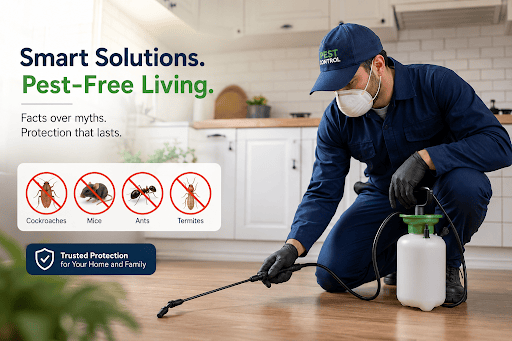
Pest prevention is both an art and a science. It combines regular assessments, targeted actions, and behaviour changes. Myths persist because they’re easy to believe, but they fail when tested against knowledge and experience. Rely on trained professionals, validated strategies, and up‑to‑date pest control information and facts to protect your home.
FAQ’s
Q1. Do clean homes get pests?
Clean homes can still get pests. While clutter and food debris attract pests, even tidy homes offer entry points, water sources, or shelter. Pests don’t discriminate based on cleanliness alone; they seek food, moisture, and access. Proper exclusion and prevention are better defenses than cleanliness alone.
Q2. How often should you get pest control treatment?
Frequency depends on the type of pest and property conditions. Many homeowners benefit from quarterly treatments, while others with specific challenges may need monthly service or seasonal plans. A professional assessment determines the right schedule.
Q3. Are ultrasonic pest repellers effective?
Ultrasonic devices claim to repel pests with sound waves. Evidence shows mixed results. Some pets may be unaffected, while pests adapt or ignore the frequencies. These repellers are not reliable substitutes for professional pest control measures. For most homes, exclusion and targeted treatments work better.
Q4. Is pest control safe for pets and children?
Yes, when applied by trained professionals. Technicians use products and methods designed to reduce exposure risk. Safety protocols include:
- Choosing pet‑friendly formulations.
- Timing applications when occupants are away.
- Placing baits in secure stations.
Discuss any concerns with your technician. Most professional services balance effectiveness with safety.
Q5. What is the best bait for mice?
The best mouse bait depends on behavior and environment. Common effective baits include:
- Peanut butter (aromatic and attractive).
- Chocolate or cereals.
- Commercial bait blocks with high palatability.
Always place baits in tamper‑resistant stations and follow instructions to protect children and pets. Professional rodent control often uses strategic placement and monitoring to improve success.
Ready to stop relying on myths and start protecting your home the right way? Contact a licensed pest control professional today for a customised plan backed by real facts.