Finding snakes in crawl space areas can be alarming. The safest response is to keep your distance, move children and pets away, and contact a trained wildlife professional. A snake may be harmless, but correct identification is difficult in a dark, confined area.
Snakes often enter for shelter, stable temperatures, water, or prey such as mice, insects, frogs, and other small animals. Removal solves the immediate problem. Inspection, exclusion, and control of attractants can help reduce the chance of another snake entering.
Table of Contents
Why Do Snakes Get Into Crawl Spaces?
Snakes enter crawl spaces because these areas can provide cover, steady temperatures, and access to food. An open vent, foundation crack, damaged screen, pipe gap, or loose crawl space door may give them a way inside.
Common attractants include:
- Rodents or other small prey
- Damp or humid conditions
- Tall grass and thick shrubs near the foundation
- Wood piles, boards, rocks, or outdoor debris
- Openings around utility lines and plumbing
- Quiet areas with little human activity
Rat snakes and garter snakes may enter while following prey or seeking shelter. Venomous species may also use protected areas. Never depend on color, head shape, or an online photo to identify a snake from close range.
Common Signs You Have a Snake in Your Crawl Space
A snake in a crawlspace may remain hidden, so a direct sighting is not the only possible warning sign. Look for clues from a safe position outside the crawl space.
Possible signs include:
- A snake moving through a foundation vent or access opening
- Shed skin near pipes, insulation, vents, or support piers
- Droppings in a protected area
- Smooth trails across dust, loose soil, or vapor-barrier material
- Repeated rodent activity that may attract snakes
- A damaged vent screen or access door that does not close tightly
A shed skin only confirms that a snake was present at some point. It does not prove the snake is still inside. A professional inspection can determine whether active wildlife is present and locate possible entry points.
Are Snakes Under My House Dangerous?
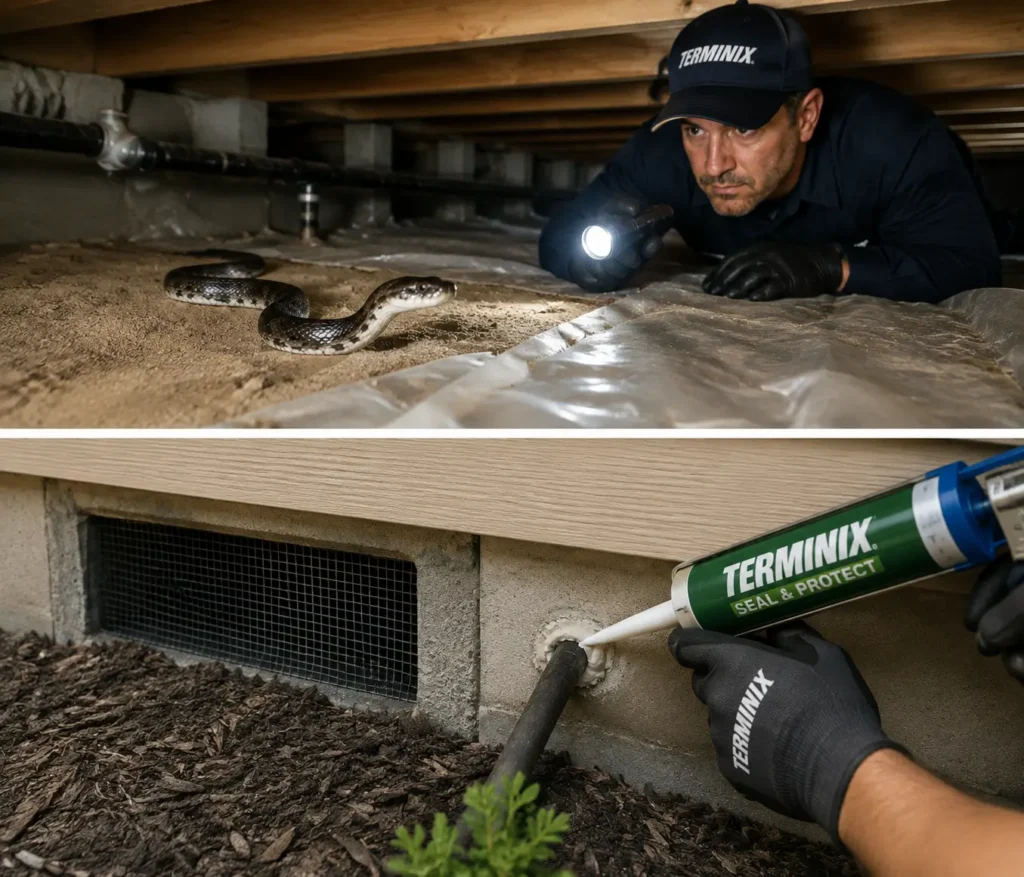
If you find a snake under your house, it usually refers to a snake inside a crawl space, beneath a porch, or close to the foundation. Most snakes try to avoid people. The risk increases when a snake is cornered, stepped on, grabbed, or blocked from escaping.
Possible concerns include:
- A defensive bite
- Venom exposure if the species is venomous
- Risk to pets, children, inspectors, or repair workers
- Movement into a basement, garage, or living area through an open gap
- Ongoing rodent or wildlife activity that is attracting the snake
Snakes also help control rodents and other pests. The goal should be safe removal and prevention, not unnecessary contact or harm.
How to Get Rid of Snakes in Crawl Space
The safest answer to getting rid of snakes in your crawl space areas is to avoid direct contact and use a trained wildlife professional. Do not crawl toward the snake, try to pin it, or reach into an area where you cannot see.
Take these steps:
- Move away from the crawl space entrance.
- Keep children and pets away from the area.
- Do not block the snake into a corner.
- Note its location and visible markings from a safe distance.
- Close nearby doors that could give it access to living areas.
- Contact a professional for identification, removal, and inspection.
| Situation | Safest Next Step | Why It Matters |
| The snake is visible near an exterior exit | Keep your distance and give it space | A snake may leave when it does not feel trapped |
| The snake is inside an enclosed crawl space | Keep the access door closed and call a professional | Entering may place you within striking distance |
| You cannot identify the species | Treat it as potentially venomous | Misidentification can lead to a serious bite |
| The snake is no longer visible | Arrange an inspection | It may still be hidden, and the entry point remains open |
| You see signs of rodents | Address the prey problem after removal | Food sources can attract future snake activity |
Do not try to kill, capture, or move the snake. Many bites happen when people attempt to handle or harm a snake.
Why You Should Never Handle a Snake in your Crawl Space on Your Own
A crawl space limits visibility and movement. You may not have enough room to step back if the snake moves toward you. Pipes, low joists, insulation, wiring, and stored items can also make a quick exit difficult.
Homeowners should not attempt removal because:
- Harmless and venomous species can look similar
- A frightened snake may defend itself
- Shovels, grabbers, glue traps, or improvised containers can increase risk
- The snake may disappear into insulation, wall gaps, or utility openings
- Removing one animal does not explain how it entered
- A bite in a confined area can delay safe exit and medical care
Never place a hand or foot into a dark opening to check whether the snake has moved. Wait for a trained professional with the proper equipment to inspect the space safely.
Does Terminix Get Rid of Snakes?
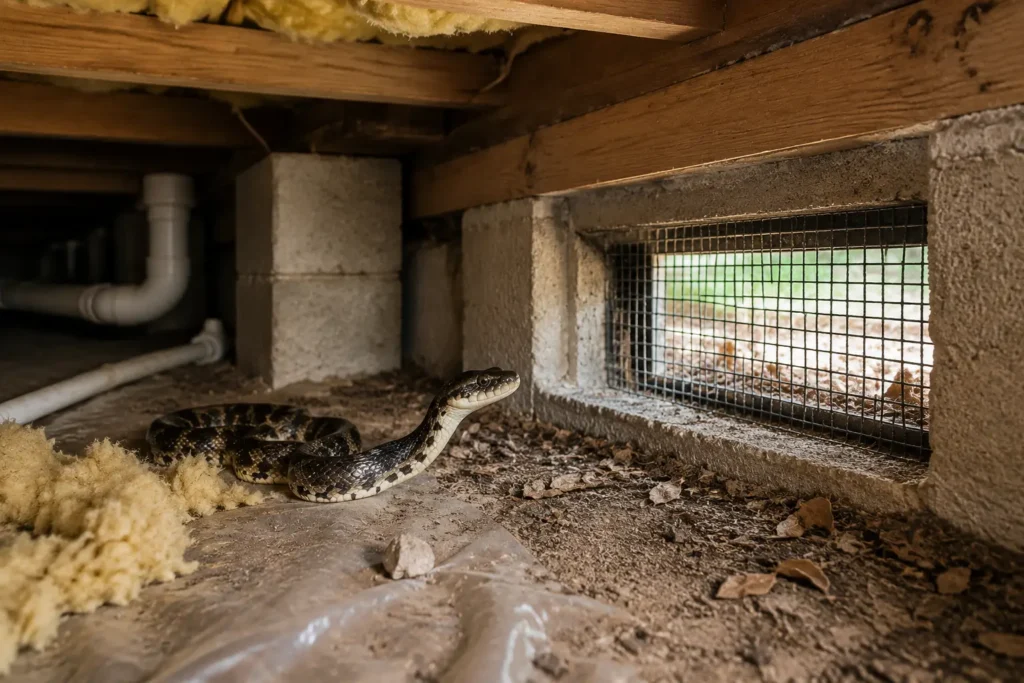
Yes. Terminix offers professional snake removal and control through its wildlife services. These services may include physical removal or trapping, inspection of problem areas, exclusion after removal, and recommendations for conditions that may be attracting snakes.
Homeowners can learn more about snake removal and control or review the broader residential wildlife control service.
How Terminix Snake Removal Works
Terminix snake removal begins with an inspection and a plan based on the location, access points, and signs of other pest activity. The goal is to remove the snake and help prevent repeat entry.
The process may include:
- Inspection: A wildlife professional checks the crawl space and exterior for the snake, shed skin, droppings, access points, and prey activity.
- Removal or trapping: The professional selects an approach suited to the situation.
- Entry-point control: After removal, vulnerable openings may be addressed through Terminix residential exclusion services.
- Attractant reduction: The inspection may identify rodents, vegetation, clutter, moisture, or other conditions that support repeat activity.
- Prevention guidance: The homeowner receives practical recommendations based on the property and the areas where activity was found.
Terminix’s broader approach focuses on inspection, targeted control, exclusion, monitoring, and long-term prevention rather than temporary removal alone.
Crawl space humidity can support insects and rodents that become prey for snakes. When moisture contributes to the problem, Terminix moisture control services help address the underlying crawl space conditions.
Snakes in Crawl Spaces in North Carolina and Virginia: What You Need to Know
Homes in North Carolina and Virginia may experience snake activity because the region has warm seasons, wooded areas, rainfall, coastal humidity, and many homes with crawl spaces. Snakes may move closer to a structure while following prey or looking for a protected area during temperature changes.
Common nonvenomous visitors may include rat snakes and garter snakes. Copperheads occur across North Carolina and Virginia. Cottonmouths occur in parts of the Coastal Plain and southeastern Virginia. Timber rattlesnakes also live in suitable habitats.
Location, age, lighting, and natural variation can affect a snake’s appearance. Do not move closer to identify it.
Regional prevention should focus on the whole property:
- Keep grass and shrubs trimmed near the foundation
- Move firewood, boards, rocks, and debris away from the house
- Repair crawl space doors and vent screens
- Seal gaps around pipes, cables, and foundation openings
- Reduce rodent activity and outdoor food sources
- Correct standing water and drainage problems
- Address excess crawl space moisture
- Schedule an inspection after a crawl space or indoor sighting
These steps reduce shelter, prey, and access rather than depending on a temporary deterrent.
FAQ’s
Can a Crawlspace Snake Enter the Living Area?
Yes. A snake may move through gaps around pipes, ducts, wiring, doors, or damaged building materials. Close nearby interior doors and keep people and pets away while arranging professional help.
Does Shed Skin Mean the Snake Is Still Inside?
Not always. Shed skin confirms that a snake was in the area, but the animal may have already moved away. Avoid reaching into insulation or hidden areas to search for it.
Does One Snake Mean There Is a Nest Under the House?
Not necessarily. A single snake may have followed prey or entered for shelter. One sighting does not confirm that eggs or additional snakes are present.
Can Pet Food Attract Snakes?
Pet food does not directly attract snakes, but it may attract mice and rats. Those rodents can then attract snakes. Store pet food and birdseed in sealed containers and clean up spilled food.
What Information Should I Give the Wildlife Professional?
Explain where and when you saw the snake. Describe its approximate size, markings, and direction of movement. Mention pets, children, damaged vents, rodent signs, or recent repair work. Only take a photo when you can do so from a safe distance.
For professional help with a snake in or around your home, contact Terminix or call 1-800-284-7911 to request service.