Bed bugs can hide in mattresses, box springs, headboards, furniture, gaps in walls, and belongings near where people rest. The best answer to how to get rid of bed bugs is to confirm the infestation, limit its spread, clean affected items, and use a treatment plan that reaches hidden bugs and their eggs.
A complete plan for bed bug removal should do more than kill the insects you can see. It should address every affected room, treat likely hiding places, protect key items, and include steps that reduce the chance of another infestation.
Table of Contents
How Do You Know You Have Bed Bugs?
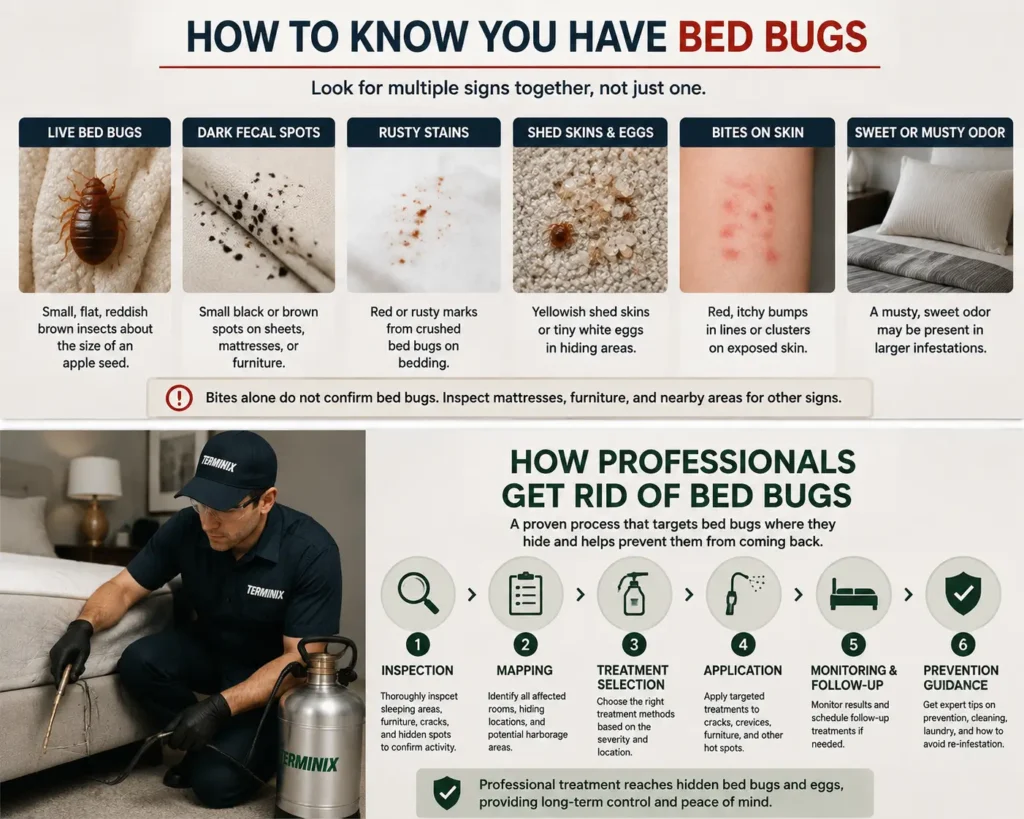
Bed bugs are small, flat insects that stay close to places where people sleep or sit for long periods. Adult bed bugs are often compared with apple seeds in size, shape, and color. Younger bed bugs are smaller and lighter.
Look for several signs together:
- Live bed bugs in mattress seams, box springs, headboards, bed frames, or nearby furniture
- Small, dark fecal spots on bedding, mattresses, or furniture
- Red or rusty stains on sheets or pillows
- Shed skins, eggs, or eggshells near hiding places
- A sweet or musty odor when an infestation is large
- Raised, itchy marks that may appear in lines or clusters
Bites alone do not confirm bed bugs. Reactions can look similar to bites from fleas, mosquitoes, or other insects. Inspect the sleeping area and nearby furniture before deciding what pest is present.
Bed bugs can also hide beyond the bedroom. Recliners, couches, office chairs, taxis, theaters, hotels, and other places where people sit for extended periods may give bed bugs access to a host. Review the Terminix bed bug identification guide for more places to inspect.
Why Bed Bugs Are So Hard to Get Rid of on Your Own
Bed bugs are skilled hitchhikers. They can enter a property on luggage, clothing, used furniture, boxes, or personal belongings. Once indoors, they move into narrow cracks and protected areas that are easy to miss.
The insects do not need to stay inside a mattress. They may hide behind headboards, inside box springs, under carpet edges, within furniture joints, around baseboards, or in nearby fixtures. A surface spray may not reach these locations.
Eggs add another challenge. A treatment that removes active adults but misses eggs or hidden young bed bugs may provide only temporary relief. Moving untreated items between rooms can also spread the infestation.
Successful control depends on careful inspection, correct treatment, item management, and follow-up. Cleaning only the bed rarely addresses the full problem.
How Do Exterminators Get Rid of Bed Bugs?
The direct answer to how exterminators get rid of bed bugs is that they use a structured process instead of treating only the visible insects. The exact plan depends on the size, location, and severity of the infestation.
A professional process may include:
- Inspection: The technician checks sleeping areas, nearby furniture, cracks, seams, and other likely hiding places.
- Infestation mapping: The technician determines which rooms, furniture pieces, and belongings may be affected.
- Treatment selection: The plan may use targeted products, controlled heat for suitable items, encasements, or a combination of methods.
- Application: Treatment is placed in areas where bed bugs hide, travel, and reproduce.
- Monitoring and follow-up: The treated areas are checked for continued activity and may receive additional service when needed.
- Prevention guidance: The technician explains how to handle laundry, luggage, furniture, clutter, and other reinfestation risks.
How Does Terminix Get Rid of Bed Bugs?
Terminix offers a free, no-obligation inspection. Certified K9 bed bug detection may also be available for an additional charge when more detailed detection is needed.
After the inspection, a certified technician develops a customized plan for the affected room or area. The plan may combine targeted treatment, a portable heat chamber, mattress or box-spring encasements, and follow-up protection.
Terminix states that treatment is customized to eliminate bed bugs from the infested room or area. If bed bugs are found in that treated space within 30 days, further treatment is provided at no additional cost. Customers may also have the option to extend coverage against future infestations.
Terminix Bed Bug Treatment Options Explained
Terminix bed bug treatment options include high-powered vacuuming to physically remove bed bugs and eggs from infested areas, followed by direct steaming that uses high-temperature steam to penetrate cracks, seams, and fabric surfaces to kill remaining bed bugs on contact.
| Treatment option | What it does | When it may help |
| Targeted treatment | Treats cracks, crevices, furniture areas, and other bed bug hiding places | When active bugs are found in defined rooms or areas |
| Portable heat chamber | Uses carefully controlled hot air to kill bed bugs in all life stages on suitable items | For mattresses, box springs, furniture, electronics, artwork, and items that are hard to replace |
| Mattress and box-spring encasements | Blocks bed bugs from entering or escaping protected bedding | As part of treatment and ongoing protection |
| K9 detection | Uses a certified bed bug detection dog to help locate activity | When the infestation is difficult to find, or the property needs a broader inspection |
| Follow-up coverage | Provides additional treatment when activity is found within the stated coverage period | When continued monitoring and added protection are needed |
Terminix uses a portable heat chamber rather than relying on whole-house heat as its standard heat option. The chamber can treat selected items in hours, uses carefully controlled temperatures, and reduces pesticide use for those items. Learn more about Terminix bed bug heat treatment.
DIY Bed Bug Removal vs Professional Treatment: What Actually Works
DIY steps can reduce the number of bed bugs on washable items and exposed surfaces. They may also help contain the problem while professional service is arranged. However, they are less reliable when bugs are hidden in walls, furniture, multiple rooms, or belongings that cannot be washed.
For someone researching how to get rid of bed bugs, the key is knowing which actions support control and which actions are unlikely to solve the entire infestation.
| Method | What it can do | Main limitation |
| Wash and dry bedding on the hottest safe settings | Helps remove or kill bed bugs on washable fabrics | Does not treat furniture, cracks, or nearby rooms |
| Vacuum mattresses, box springs, carpet edges, and furniture seams | Removes exposed bugs, eggs, and debris | Can miss deep hiding places and requires careful vacuum disposal |
| Use a zippered mattress encasement | Traps bugs already inside and blocks new access to the protected mattress | Does not treat bed frames, walls, furniture, or other belongings |
| Reduce clutter and bag cleaned items | Limits hiding places and protects treated belongings | Does not eliminate an established infestation |
| Use store-bought sprays | May affect bugs that receive direct and proper treatment | Product misuse or incomplete coverage can leave hidden activity |
| Hire a professional | Combines inspection, targeted treatment, item management, and follow-up | Costs more than a single DIY product |
When homeowners ask how exterminators get rid of bed bugs, the most important difference is coverage. A professional looks beyond the mattress and treats the infestation as a property-level problem.
Avoid moving unbagged bedding, furniture, or belongings into another room. This may carry bed bugs into spaces that were not previously affected.
How Much Does Bed Bug Removal Cost?
Bed bug treatment does not have one fixed price for every property. Terminix creates a customized plan after inspecting the affected area, so the final cost depends on what the technician finds.
The price of a Terminix bed bug treatment may be affected by:
- The number of rooms or areas involved
- The level of bed bug activity
- The amount and type of furniture or belongings that need treatment
- The treatment methods selected
- Optional K9 detection
- Follow-up or extended coverage choices
- The preparation required before service
A small, contained problem may require a different plan than activity found across several rooms. Request a Terminix bed bug inspection to receive recommendations and a quote based on the property.
How to Prepare Your Home Before Bed Bug Treatment
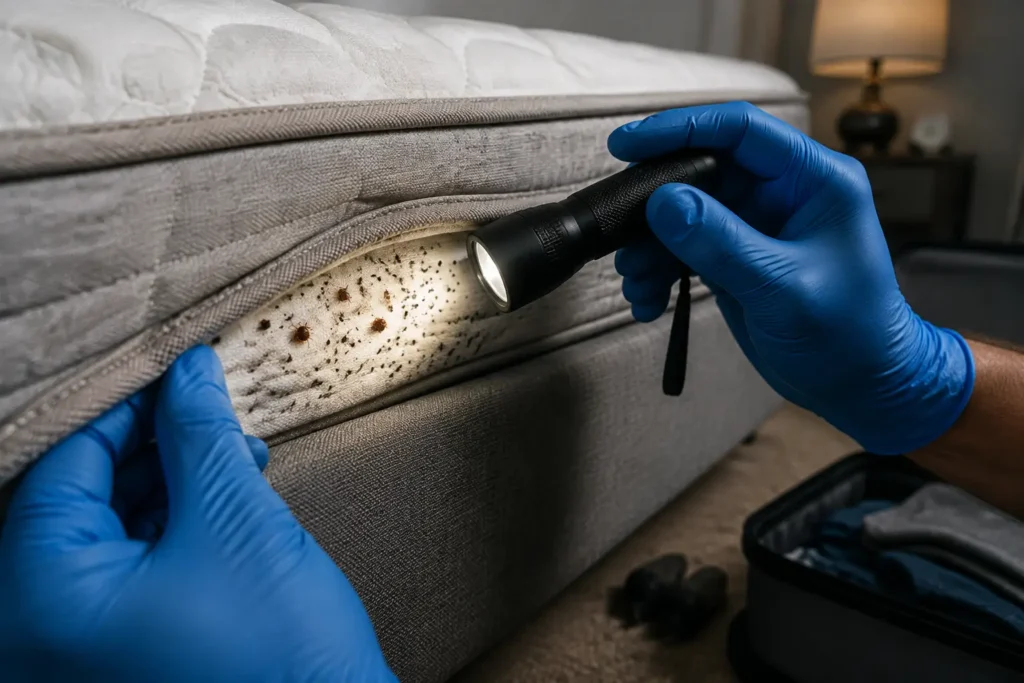
Preparation helps the technician reach affected areas and reduces the risk of moving bed bugs around the home. Follow the instructions provided for your specific treatment because the required steps may vary.
Common preparation steps include:
- Tell the technician where bites, stains, bugs, or shed skins were found.
- Remove clutter from floors, beds, closets, and furniture without carrying loose items into another room.
- Place washable bedding and clothing in sealed bags before moving them.
- Wash and dry items on the hottest settings allowed by their care labels.
- Put cleaned items into fresh, sealed bags or containers.
- Vacuum mattress seams, box springs, bed frames, carpet edges, and upholstered furniture if instructed.
- Empty the vacuum outdoors into a sealed bag.
- Create access around beds, baseboards, closets, and affected furniture.
- Do not apply new sprays, powders, or foggers unless the technician approves them.
- Ask which people, pets, plants, medicines, electronics, or sensitive items must leave the treatment area.
Good preparation supports bed bug removal because it separates cleaned items from untreated items and gives the technician access to important hiding places.
How to Prevent Bed Bugs from Coming Back
Bed bugs can return when they are carried into the home again. Prevention focuses on travel habits, used items, early detection, and careful handling of belongings.
Use these steps:
- Inspect hotel mattresses, headboards, and luggage areas before unpacking.
- Keep luggage on a rack and away from beds or upholstered furniture.
- Check seams and pockets before bringing luggage inside after a trip.
- Wash and dry travel clothing promptly in the hottest safe settings.
- Inspect used furniture before bringing it into the home.
- Avoid picking up discarded mattresses or upholstered furniture.
- Keep sleeping areas less cluttered so new activity is easier to spot.
- Maintain properly installed mattress and box-spring encasements.
- Check beds and nearby furniture when guests, tenants, or residents report possible activity.
- Contact a professional early if stains, shed skins, eggs, or live bugs appear.
When searching online for bed bugs, Terminix is immediately available when you have new bed bug sightings or a repeat infestation. Early inspection can help determine whether the problem is new, isolated, or connected to untreated belongings.
FAQ’s
Can I remove bed bugs without throwing away my mattress?
You may not need to discard the mattress. Professional treatment, a portable heat chamber for suitable items, and a properly installed encasement may allow some mattresses and box springs to remain in use. Do not move or dispose of an infested mattress without guidance because handling it can spread bed bugs.
Does Terminix treat bed bug eggs?
A portable heat chamber and direct steaming treatments are designed to kill bed bugs in all life stages on treated items. Other parts of the plan may target cracks, crevices, furniture, and nearby areas where bugs or eggs may be hidden.
What happens after a Terminix bed bug treatment?
After a Terminix bed bug treatment, follow the technician’s re-entry, cleaning, laundry, monitoring, and prevention instructions. Terminix states that if bed bugs are found in the treated room or area within 30 days, it will provide further treatment at no additional cost under its bed bug guarantee.
Can DIY treatment completely remove an infestation?
DIY methods such as laundering, vacuuming, using mattress encasements, and reducing clutter may help reduce bed bug activity. However, they often miss hidden bugs, eggs, or infestations that have spread to multiple rooms. If you are wondering, “How do exterminators get rid of bed bugs?” the process typically involves a detailed inspection, targeted treatment, monitoring, and follow-up visits.
Is bed bug removal possible in one visit?
The time needed for bed bug removal depends on the infestation, treatment method, preparation, and whether activity remains after service. A contained issue may be simpler than an infestation involving several rooms or many belongings.
Where can I schedule service?
Visit the Terminix contact page or call 800-284-7911 to request service. You can also use the location finder to reach the nearest office.