Finding one spider indoors is common. Finding webs in several rooms, spiders in tubs or closets, or egg sacs behind furniture can make the problem feel larger and more persistent.
Spider activity usually comes down to four conditions: food (other insects), quiet hiding spots, moisture, and easy access into the home. A few spiders may not be a serious issue, but frequent sightings can point to a larger pest problem. This guide explains what causes spiders in the house, how to spot signs of increased activity, and how to get rid of spiders in home spaces with practical prevention steps.
Table of Contents
Is It Normal to Have Spiders in Your House?
Usually yes. Spiders can enter through small openings around doors, windows, vents, siding, and utility lines. Some wander in from outside, while others settle into quiet spaces to hunt insects, which is often what leads people to ask “Why are there spiders in my house?”
Most indoor spiders avoid people. They tend to stay in corners, basements, garages, closets, storage areas, and other low-traffic spaces where they are less likely to be disturbed.
When spider activity becomes a concern
The problem becomes more noticeable when webs return soon after cleaning, spiders appear in several rooms, or egg sacs show up behind furniture and in storage areas. Repeated sightings in bedrooms, bathrooms, closets, and basements may indicate the home is providing spiders with more than one reason to stay.
Multiple spiders in your house is often a sign of a larger pest concern. If spiders are finding enough insects to feed on, the home may also be attracting flies, ants, mosquitoes, cockroaches, silverfish, or other pests.
Quick Fact: Spiders are predators. They are usually drawn indoors by insects, hiding spots, moisture, and access points rather than pantry food alone.
Why Are There So Many Spiders in My House? Common Causes
First and foremost, spiders follow their food source. If flies, ants, mosquitoes, roaches, or other insects are active inside or around the home, spiders may stay nearby to hunt.
Outdoor lighting can also increase activity. Bright lights near doors, windows, garages, and patios can draw flying insects at night. Spiders may build webs in those areas because prey is easier to catch there.
Dark, quiet spaces give them shelter
Spiders prefer places where they can hide and remain undisturbed. Attics, basements, crawl spaces, garages, closets, storage rooms, and cluttered corners all give spiders places to build webs and wait for prey.
Cardboard boxes, stacked papers, stored clothing, holiday decorations, and unused household items can make these areas more attractive. The more protected spaces a home provides, the easier it is for spiders to stay out of sight.
Moisture supports spider activity
Moisture can attract both spiders and the insects they eat. Bathrooms, basements, laundry rooms, crawl spaces, and areas near plumbing leaks can become active pest zones when humidity stays high.
Fixing leaks, improving ventilation, and reducing dampness can make these spaces less inviting. Moisture control is often an important part of spider prevention.
Seasonal changes make spiders more visible
Spider sightings often increase during seasonal shifts. Warm weather can increase insect activity around the home. Cooler weather can push some pests indoors. As conditions change, spiders may move closer to shelter, water, and prey.
What Causes a Spider Infestation in Your Home? Signs of a Growing Spider Problem
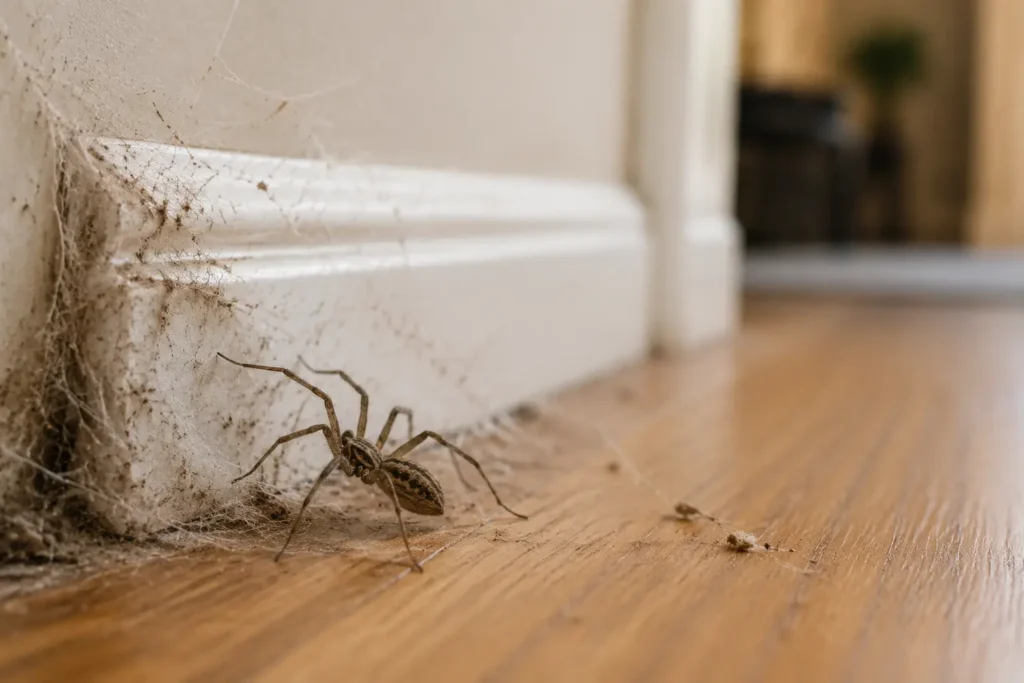
Spiders are common in most homes, but an increase in their activity can sometimes indicate that conditions are becoming more favorable for them to stay and multiply. When people start noticing changes like frequent sightings or persistent webs, it often raises the question of what causes spider infestation and why the problem seems to be getting worse over time. While an occasional spider is normal, repeated activity, web buildup, or signs of breeding may suggest a larger underlying issue. Paying attention to where and how often spiders appear can help you understand whether their presence is increasing.
Webs keep coming back
A few webs in quiet corners are common. New webs that return quickly after cleaning may point to active spider populations.
Pay close attention to ceiling corners, windowsills, basements, garages, closets, and areas behind furniture. These spots often provide the cover spiders prefer.
Egg sacs appear in hidden spaces
Egg sacs are another sign to take seriously. They may look like small silk-wrapped balls tucked into corners, webbing, storage areas, or protected gaps.
Removing egg sacs during cleaning can help reduce future spider activity. Use a vacuum or web brush, then empty the vacuum contents outside.
Other pests are active too
Spiders and insects often appear together. If ants, flies, mosquitoes, roaches, or other pests are also showing up, the spider problem may be part of a larger pest issue.
Tip: Place sticky traps along walls, behind furniture, at basement edges, and near suspected entry points. Areas with the most activity can help show where spiders or insects are moving.
How to Get Rid of Spiders in Home Areas: Start With The Insects They Feed On
The first step in getting rid of spiders in home areas is reducing the insects they eat. Wipe up crumbs and spills, store food in sealed containers, take out trash regularly, and keep lids tight on indoor and outdoor bins.
It also helps to reduce insect activity near doors and windows. Use warmer exterior bulbs where appropriate, keep lights away from entry points when possible, and make sure screens and door seals are in good condition.
Seal entry points
Spiders can use small openings to get indoors. Check for gaps around windows, exterior doors, garage doors, siding, vents, pipes, cables, and foundation openings.
Seal cracks with caulk where appropriate, repair torn screens, install door sweeps, and close gaps around utility lines. These steps also help reduce the insects and spiders that may be following you indoors.
Clean, declutter, and remove webs
Regular cleaning makes the home less comfortable for spiders. Vacuum ceiling corners, baseboards, windowsills, closets, under furniture, and storage areas. Remove webs and egg sacs when you find them.
Decluttering matters too. Store items in sealed plastic bins instead of cardboard boxes where possible. Keep floors in closets, basements, and garages clear so spiders have fewer places to hide.
Manage moisture inside and outside
Fix plumbing leaks, run bathroom fans, use dehumidifiers in damp areas, and improve airflow in basements and crawl spaces. Outside, clean gutters and keep water from pooling near the foundation.
A drier home is less appealing to many insects, which also makes it less attractive to spiders.
When to Call a Professional for Spider Control
If regular cleaning, sealing entry points, and moisture control are not reducing spider activity, it may indicate a deeper issue such as hidden insect activity or unnoticed access points inside or around the home. In many cases, spiders are present because their food source or shelter is still available, even if it is not immediately visible.
Professional pest control services can help assess the situation more thoroughly by identifying where spiders are nesting, what is attracting them, and how they are entering the property. This approach is especially useful when activity continues despite consistent home maintenance efforts or when you feel like there are spiders all over my house and the problem keeps coming back.
It is also important to be cautious if there is any uncertainty about the type of spider present. While most house spiders are harmless, some regions do have more concerning species, and accurate identification can be difficult without training. A licensed technician can properly identify the species, locate potential harborage areas, and recommend a targeted treatment plan based on the specific situation.
Key Takeaways
- A few spiders indoors can be normal.
- The main causes of spider activity are insect prey, shelter, moisture, and access points.
- Recurring webs, egg sacs, and frequent sightings may point to a larger issue.
- Homeowners should look for both spiders and the insects that feed them.
- The most effective spider control plan includes pest reduction, sealing, cleaning, decluttering, and moisture control.
- Professional help makes sense when spiders keep returning, or concerning species may be present.
End Note
Spider activity is rarely random. Spiders show up when a home gives them food, shelter, moisture, and a way inside. Reducing those conditions can make the home less inviting and help keep activity under control.
If spiders keep showing up after cleaning and sealing, or if there are signs of a broader pest issue, Terminix can help. Schedule a professional inspection to find out what is attracting spiders, where they are hiding, and what treatment plan makes sense for your home.
FAQs
Do spiders come up through drains?
Spiders are often found in sinks and tubs, but they usually do not come up through the drain. They often fall into smooth-sided fixtures while moving through the home and cannot easily climb back out.
Should I remove spider egg sacs?
Yes. Egg sacs should be carefully removed with a vacuum or a web brush. Empty the vacuum contents outside so spiders or eggs are not left inside the home.
Why do I keep seeing spiders in the bathroom?
Bathrooms often provide moisture, shelter, and access to insects. Ventilation, leak repair, and regular cleaning can help reduce spider activity in these areas.
Does killing visible spiders solve the problem?
Killing visible spiders may reduce immediate sightings, but it does not address why they are there. If insects, gaps, moisture, and clutter remain, more spiders can keep showing up.
Can outdoor lights attract more spiders?
Outdoor lights do not attract spiders directly, but they can attract flying insects. Spiders may build webs near those lights because insects are easier to catch there.