SERVICE REQUEST?
Fill out the form below.
Find our nearest location
Your Local Office

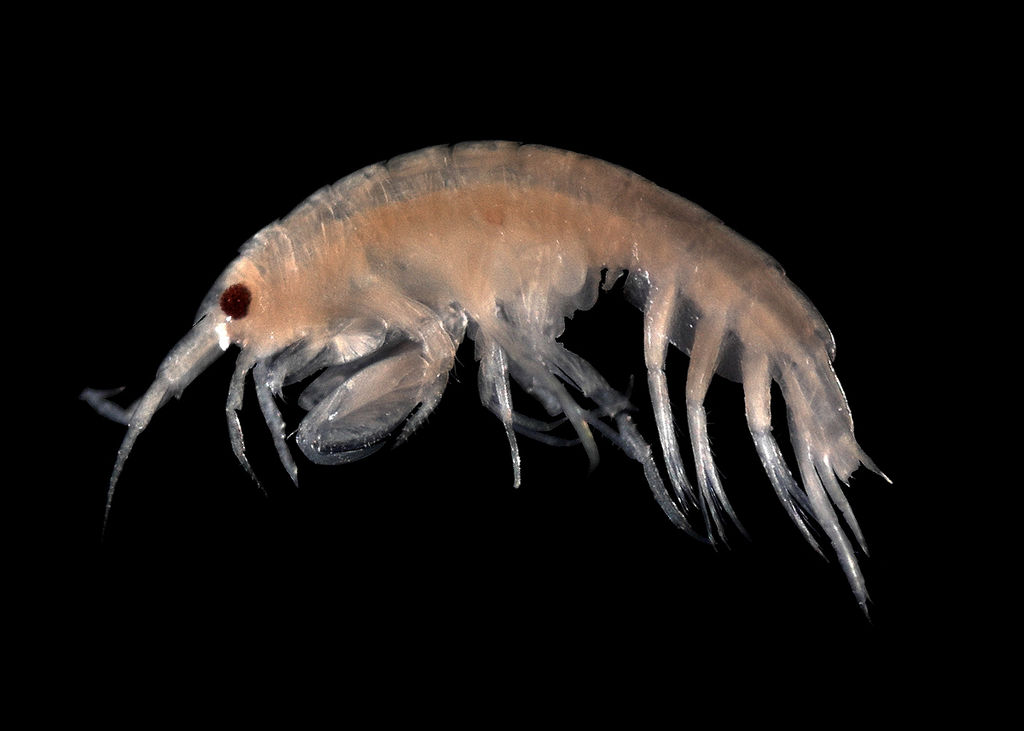
Amphipod
Attribution: Hans Hillewaert, [CC-BY-SA-3.0], via Wikimedia Commons
Size:
¼- to 1-inch long
Color:
Usually dark brown or black but may appear red, pink, yellow, green or blue in color, depending on the species. Upon death, they often turn bright red.
Behavior:
Amphipods are commonly referred to as scuds and inhabit most oceans, lakes, rivers, beaches, caves and other warm moist environments. They are laterally compressed or flattened in shape and resemble small shrimp. They jump when disturbed which gives them their nickname of “beach fleas” or “sand hoppers.” These crustaceans are important members of the food chain, serving as food for many fish, invertebrates, shore birds and other animals. They are also important as scavengers of carrion and detritus. Drought, excessive rain and prolonged watering of landscaping may cause amphipods to seek better living conditions, thus bringing them into a home or building. Upon death indoors, their desiccated bodies often turn bright red.
Amphipods may be found in highly moist forest litter and other dense ground cover where they may burrow into the top few inches of soil. They are commonly found living beneath ivy used as a ground cover.
Amphipod indoor invasions occur when conditions outside support large numbers of these crustaceans. Treatments can provide short-term relief, but correction of such conditions is key to long-term success. Altering or eliminating excess moisture conditions next to a building may be helpful, particularly as it relates to watering landscapes and lawns, as well addressing drainage issues. Thick ground covers such as ivy, “monkey” grass, etc. should not be located next to or near a foundation as it provides harborage for innumerable insects, spiders, mice and other pests. Items in contact with the soil should be removed, wherever possible. Exterior cracks and holes should be sealed, especially along the foundation. Weep holes can be “closed” by stuffing pieces of wire mesh or screening into the openings. Inside treatments usually are not needed because amphipods dry out quickly and die.
Family Name:
Class Crustacea, Order Amphipoda
Read What Our Clients
Are Saying
Super friendly and dedicated to quality customer service!
Incredible customer service. Thorough and professional!
Ronaldo Thomas did a great job. Thank you sir for taking your time and not rushing great service
Zach H is the bomb! Great customer service! Handle my problem superior. I was freaking out I’m terrified of mice/rats and Zach made me comfortable and confident that Terminix will get the job done over all the other pest companies call “Zach Attack at Teminix!”👍🏾
Very satisfied with their service.
Quenton, is a great technician did a thorough job.
Ronaldo provides exceptional service. I recommend his customer service
Daniel MainsHe was very well informed and kind. Made the process easy and stress free.
Do you professional and his business quite well?nAnd very respectful of the property
Mr. Thomas was amazing! He explained everything that he was doing and was very nice.
Ronaldo (Thomas) was amazing! He goes above and beyond ever service!
Very attentive work with excellent customer service and performance!
SERVICE REQUEST?
Fill out the form below.