SERVICE REQUEST?
Fill out the form below.
Find our nearest location
Your Local Office
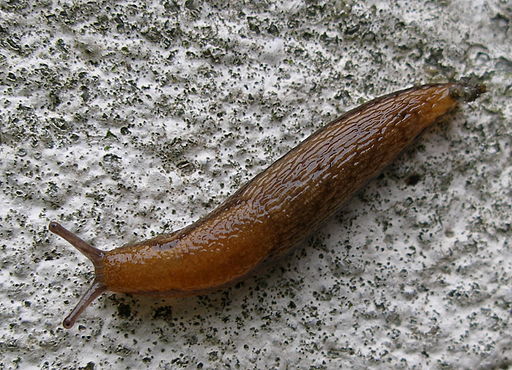
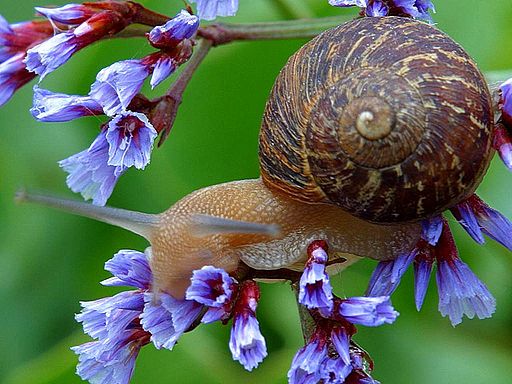
Slug & Snail
Attribution: Jon Sullivan, via Wikimedia Commons
Attribution: Guttorm Flatabø, [GFDL, CC-BY-SA-3.0 or CC-BY-SA-2.5], via Wikimedia Commons
Size:
Most are small, measuring up to 1 inch. Some snails in the southern states may have shells up to 1½ inch or more. Some slugs measure up to 3 inches while others (e.g., banana slugs) in the Pacific Northwest can measure up to 10 inches when fully extended.
Color:
Varies depending on species. Usually brown, yellow or green. Some species may be black.
Behavior:
Snails and slugs are well-known and are common inhabitants around most homes not located in dry climates. Snails enclose themselves with a protective shell while slugs have no such protection. Slugs cover themselves with a slime layer that leaves a trail wherever they crawl. Both slugs and snails can be serious pests of landscape plantings, and slugs can be found crawling on floors indoors at times. On occasion, large numbers can develop around a home or other buildings resulting in numerous specimens being seen on patios, decks and even indoors. Snails and slugs are mainly nocturnal, preferring to feed in the evening or on dark days. Slugs are often found feeding on pet food left outdoors, often making it unpalatable due to the slime left behind. Both mollusks need moist conditions to survive. Some snails, however, are capable of sealing themselves within their shells and surviving up to four years waiting for conditions to improve. Natural enemies of slugs and snails include rats, mice, toads, some predacious beetles and their larvae, and wild birds.
Slugs and snails are found outside amongst vegetation and items in contact with the soil. They feed on and damage many types of plants and are seen as pests by many gardeners. Slugs, especially, can survive and thrive in damp basements and crawl spaces.
A common home remedy for slugs is the placement of shallow pans of beer. Although such “traps” will attract and capture slugs by themselves, they do little to remedy a significant slug problem. Thick ground covers, such as ivy, “monkey” grass, etc. should not be located next to or near a foundation as it provides harborage for innumerable snails, slugs, insects, spiders, mice and other pests. Items in contact with the soil should be removed, wherever possible. Exterior cracks and holes should be sealed, especially along the foundation. Weep holes can be “closed” by stuffing pieces of wire mesh or screening into the openings. Most nurseries and gardening stores sell slug and snail baits that can be applied to areas outdoors where these animals are posing a problem. When using such baits, label directions should be carefully followed.
Family Name:
Phylum Mollusca, Class Gastropoda
Read What Our Clients
Are Saying
Ronaldo Thomas did a great job. Thank you sir for taking your time and not rushing great service
Daniel Mains did an amazing job!! Very informative and helpful with the knowledge he had.
Ronaldo provides exceptional service. I recommend his customer service
Very friendly & helpful. Listened & addresses my concerns. Thoroughly explained the services performed.
Great service, very thorough, always a pleasure!!
Incredible customer service. Thorough and professional!
Super friendly and dedicated to quality customer service!
Dylan Winters was very informative. He checked for wasps in the shed finding none and then treated for ants.
Ronaldo (Thomas) was amazing! He goes above and beyond ever service!
Our tech, Ronaldo, was fantastic today. He arrived on time and texted me 15 minutes before pulling up. He explain the treatment plan before applying the pest control application. He incredibly friendly and answered any questions we had before he started spraying. Excellent, reliable service.
Quenton, is a great technician did a thorough job.
Thanks you Mr. Armstrong for everything.
SERVICE REQUEST?
Fill out the form below.