Seeing winged insects inside your home can be unsettling. They tend to show up fast, often in a cluster, and usually at the worst possible moment. Everything might look normal one day before you spot insects near a window, around a light fixture, or along the floor the next day–leaving you to wonder whether you are dealing with a minor nuisance or a much bigger problem.
That’s why knowing the difference between termites and flying ants matters. From a distance, they can look very similar. Up close, the differences are easier to spot, and those differences can tell you a lot about the level of risk to your home.
This guide breaks down flying ants vs termites, what to look for, how to tell if you are seeing a pest that can damage wood, and what to do next if the insects are already inside.
When comparing termites vs flying ants, focus on three features first: the waist, the antennae, and the wings. Termites have straight antennae, a broad waist, and four equal-length wings. Flying ants have bent antennae, a narrow waist, and front wings longer than the hind wings. The difference matters because termites feed on wood and can cause serious structural damage, while most flying ants are more of a nuisance. If you find swarmers or discarded wings indoors, contact a professional pest control provider for identification and an inspection.
Table of Contents
Why Flying Ants and Termites Get Confused So Often
Homeowners mix up flying termites vs flying ants all the time, especially during spring and early summer. Both insects live in colonies, produce winged swarmers, gather near windows or lights, and may leave wings behind after the swarm ends.
That’s why so many people search for bugs that look like termites or a bug that looks like an ant with wings after spotting a swarm. The confusion is understandable, but the difference matters. If the insects are termites, the colony may already be feeding on wood in or around your home.
Termites vs Flying Ants: The Three Fastest Ways to Tell Them Apart
If you can get a close look at one of the insects, three features make identification much easier.
Body Shape
Termites have a broad, straight-looking body. Their waist does not pinch inward. The whole body looks more uniform from front to back.
Flying ants have the classic ant shape. Their waists are narrow and pinched, making the body segments look more distinct.
In short: do termites look like flying ants? Yes, from a distance, but the waist usually gives them away up close.
Antennae
Termites have straight, bead-like antennae.
Flying ants have bent or elbowed antennae. That bend is one of the easiest ways to separate flying ants vs termites when you are looking closely.
Wing Size
Wing shape is one of the most reliable details in the termites with wings vs flying ants comparison.
Termites have four wings that are equal in length. Flying ants also have four wings, but the front pair is longer than the back pair.
If you find a bug that looks like an ant with wings, this is one of the first things to check. Equal wings usually point to termites. Uneven wings usually point to ants.
What Do Flying Ants Look Like in Real Life?
If you are wondering what flying ants look like, start with the image of a regular ant and add wings. The body still has a narrow waist. The antennae still bend. The front wings are still longer than the back ones.
Most flying ants are more of a nuisance than a structural threat. The main exception is the carpenter ant. Carpenter ants do not eat wood the way termites do, but they can excavate damp or decaying wood to build nests. That means their presence may point to moisture issues or wood that is already compromised.
Flying Termites vs Flying Ants: Why Swarmers Matter
Swarmers are reproductive insects released by mature colonies. They are not the workers doing the main damage, but they are still a warning sign.
With termites, swarmers can indicate that a mature colony is already established nearby. Swarmers indoors warrant immediate attention. They often gather near windows, doors, and light sources, then shed their wings.
With ants, swarmers can also appear suddenly, but the long-term risk is usually different unless carpenter ants are involved.
This is where homeowners often ask, do termites look like flying ants when they swarm. In motion, yes, they can. That is why you should slow down and examine the physical details before contacting a professional pest control provider for identification.
Signs of Termite Activity vs Signs of Ant Activity
When comparing termites vs flying ants, the insects themselves are only part of the picture. The real story is often in the damage or debris they leave behind.
Signs That Point to Termites
Common signs of termite activity include:
- mud tubes along the foundation or crawl space
- hollow-sounding wood
- bubbling paint or warped trim
- soft flooring
- discarded wings indoors
- termite droppings or frass in drywood termite cases
Termites feed on cellulose, which means they can damage framing, trim, flooring, and other wooden components over time.
Signs That Point to Ants
Most flying ants do not damage a structure. Carpenter ants can, but their activity tends to look different. Instead of eating wood, they hollow it out to make room for nests. Their debris may look more like coarse sawdust mixed with insect parts.
If the issue is tied to damp wood, leaking areas, or decaying trim, carpenter ants may be part of the problem. If you are unsure what you are seeing, contact a professional pest control provider rather than making a call based on a single sign.
Bug That Looks Like an Ant With Wings Inside Your House: What to Do Next
If you find a bug that looks like an ant with wings indoors, do not brush it off. Indoor swarmers are more concerning than insects swarming out near a stump, mulch bed, or tree line.
Here is the practical next step:
- take a few clear photos if you can
- don’t rely on spray alone
- check nearby windowsills and trim for wings or signs of activity
- contact a professional pest control provider for identification and inspection
Killing the visible insects does not tell you where they came from or whether the colony is still active.
How to Protect Your Home From Termites and Flying Ants
The best protection starts with reducing the conditions that both pests like.
Reduce Moisture
Moisture attracts termites and can also create the kind of wood damage that carpenter ants prefer. Fix leaks, improve drainage, and make sure water is moving away from the foundation.
Limit Wood-to-Soil Contact
Keep mulch, firewood, and untreated wood away from direct contact with the house.
Watch Seasonal Activity
Spring and early summer are often the most active times for swarms. During swarm season for termites, it’s helpful to pay closer attention to windows, doors, garages, and foundation areas.
Schedule Inspections
One of the most effective ways to protect your home is to have it inspected by a professional at least once a year, especially if you live in an area with frequent termite pressure or have already seen signs.
When to Call a Professional
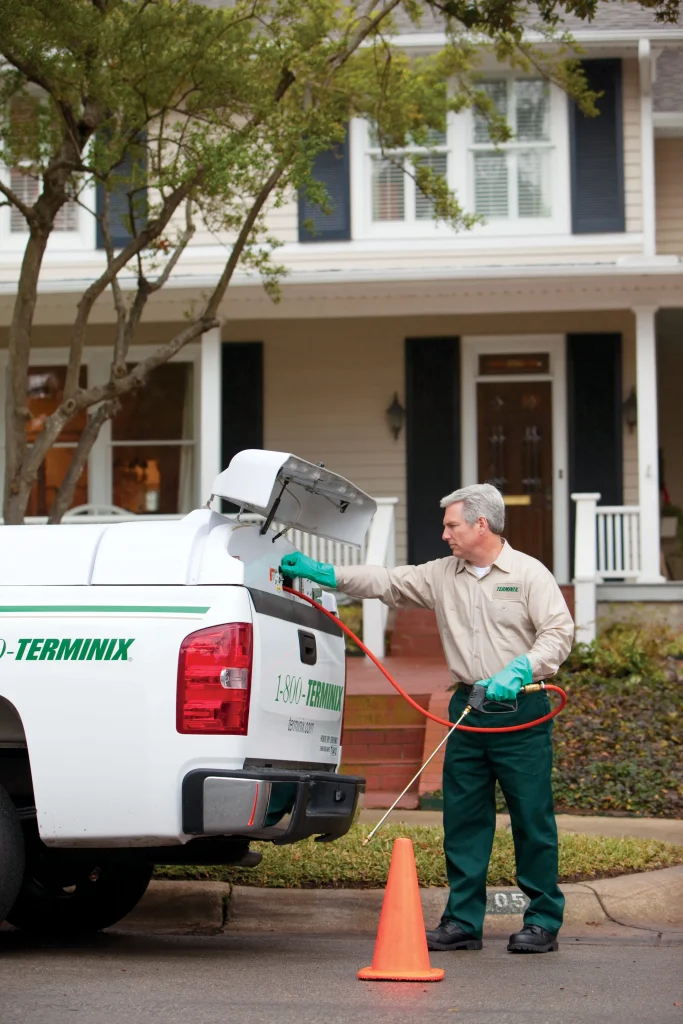
If you are comparing flying termites vs. flying ants and still aren’t sure what you are seeing, that’s when a professional inspection makes sense. The same goes for swarmers indoors, piles of discarded wings, hollow wood, mud tubes, or repeated signs in the same area.
A licensed pest control professional can identify the insect, confirm whether there is an active risk to the home, and recommend the right next step.
FAQs
What is the easiest way to tell termites vs flying ants apart?
Check the waist, antennae, and wings. Termites have a broad waist, straight antennae, and four equal-length wings. Flying ants have a pinched waist, bent antennae, and longer front wings.
What do flying ants look like compared to termites?
Flying ants look more like standard ants with wings. Their bodies are segmented with a narrow waist. Termites look more uniform and straight through the middle.
Do termites look like flying ants from a distance?
Yes. That is why homeowners often confuse them. Up close, the antennae, waist, and wing length make the difference easier to spot.
What should I do if I find a bug that looks like an ant with wings indoors?
Take a few clear photos, look for shed wings or nearby signs of activity, and contact a professional pest control provider for identification and inspection.
What is the risk of termites with wings vs flying ants?
Termites with wings often signal that a mature termite colony is nearby. Most flying ants are less serious, though carpenter ants can still point to wood or moisture issues that need attention.
Take the Next Step
When it comes to termites vs flying ants, the details matter. A broad waist, straight antennae, and equal wings can point to termites. A pinched waist, bent antennae, and uneven wings usually point to ants.
If you are still not sure what you are seeing, do not guess. Terminix can help identify the issue, inspect the home, and recommend the right next step before a hidden problem has more time to grow.