Termites are among the most underestimated threats to residential structures because they rarely announce their presence until significant damage has already occurred. Understanding where termites hide in the house is not just helpful—it is essential for protecting your home’s structure, value, and safety.
In Eastern North Carolina and Hampton Roads, Virginia, the combination of humidity, warm temperatures, and older wood-framed housing creates ideal conditions for termite activity throughout the year. Homeowners often assume termites are only a seasonal issue, but the reality is that they remain active deep inside structures long before visible signs appear.
If left unchecked, infestations can spread quietly across multiple areas of the home, including hidden framing, roof structures, and wall voids.
Table of Contents
What Type of Termites Are in Eastern NC and Hampton Roads, VA?
Homes in this region are primarily affected by subterranean termites, which live underground and build mud tubes to access food sources above the soil line. Drywood termites are less common but can still appear in isolated infestations, particularly in older wooden structures.
Subterranean termites are especially dangerous because they remain hidden beneath the surface while continuously feeding on structural wood. This is why understanding where termites hide in the house becomes a critical early defense strategy.
Common termite behavior patterns in this region:
- Movement through foundation cracks and plumbing entry points
- Hidden colonies beneath flooring systems
- Expansion through wall voids and insulation layers
- Access to roof structures via exterior wood contact
Pro Tip
Always inspect areas where wood meets soil or moisture. These are the most common entry points for subterranean termites.
For professional inspection and treatment, homeowners often rely on Terminix, which specializes in region-specific termite control solutions.
How Much Damage Can Termites Cause to a Home?
Termites do not eat wood randomly—they consume it systematically, following the grain and hollowing out structures from the inside. This makes damage difficult to detect until it becomes severe.
When asking what termite damage looks like, most homeowners expect visible destruction. In reality, early damage is often hidden beneath paint, drywall, or flooring.
Common structural impacts include:
- Weakened floor joists
- Hollow-sounding wood beams
- Crumbling drywall edges
- Sagging ceilings or flooring
Note: Visible surface damage is usually the final stage of a much larger hidden infestation.
At this stage, signs of termites in the house often include subtle clues rather than obvious destruction.
How Long Does It Take for Termites to Cause Serious Damage?
The timeline for termite damage depends on colony size, moisture availability, and temperature conditions. In warm coastal environments like NC and VA, colonies can grow faster than in colder regions.
Small colonies may take years to cause visible damage, but large colonies can compromise structural integrity in months.
If you are trying to determine how to know if you have termites, timing is critical. Early identification significantly reduces repair costs and prevents long-term structural failure.
Do You Know?
A mature subterranean termite colony can contain hundreds of thousands of workers continuously feeding 24/7 inside your home.
Termite Season in Eastern NC and Hampton Roads, VA — When Are They Most Active?
Termite activity increases significantly during spring and early summer when swarmers emerge to establish new colonies. These winged termites are often mistaken for flying ants, but they behave differently and signal an active infestation nearby.
During this period, homeowners frequently ask where flying termites hide because swarmers often appear suddenly near lights, windows, and doors before disappearing just as quickly.
Their presence usually indicates:
- A mature colony nearby
- Moisture-rich environments inside or outside the home
- Entry points around windows, roofs, or vents
DIY Termite Inspection vs. Professional Termite Inspection
Identifying termites early requires more than a surface-level visual check. While homeowners can look for warning signs, termites often remain hidden deep within structural cavities.
| Inspection Type | What It Covers | Limitations |
| DIY Inspection | Surface checks, visible wood damage | Misses hidden colonies, limited accuracy |
| Professional Inspection | Thermal imaging, moisture detection, and full structural review | Requires scheduled service |
Understanding termites in the roof is especially difficult without professional tools, as roof infestations often remain completely hidden until leaks or sagging occur.
Note
Roofs and attic spaces are among the most overlooked termite entry zones in residential homes.
For accurate detection and treatment, companies like Terminix provide comprehensive inspection services tailored to regional risk patterns.
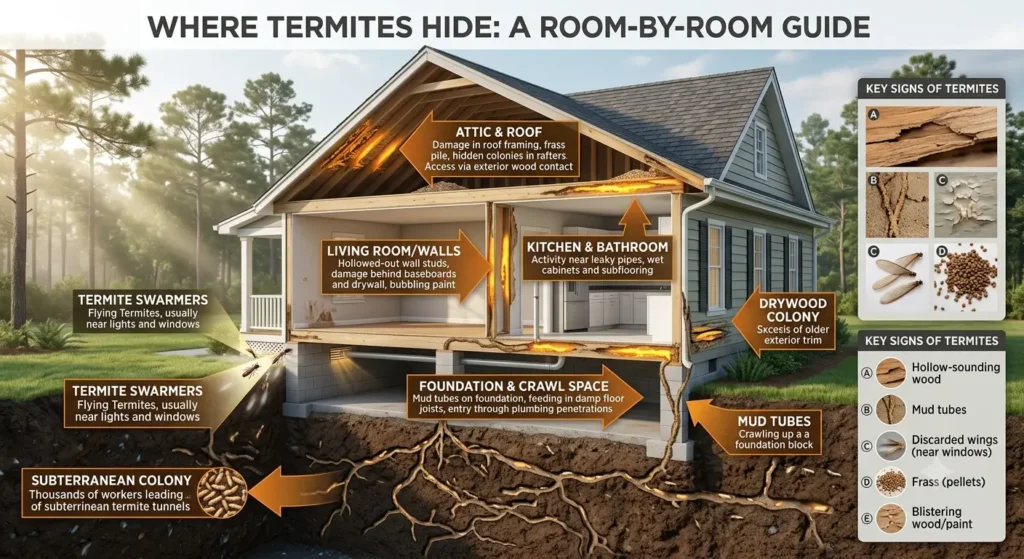
What Type of Damage Should You Look For in Different Areas of the Home?
Understanding what termite damage looks like across different rooms helps homeowners identify early warning signs before the infestation spreads.
Room-by-room breakdown:
| Area | Common Signs | Risk Level |
| Basement/ Crawlspace | Mud tubes, damp wood, and soil entry points | High |
| Living Room | Hollow walls, damaged baseboards | Medium |
| Kitchen | Cabinet damage, moisture attraction | High |
| Attic/Roof | Frass, sagging beams | Very High |
| Bathroom | Moisture-driven infestations | High |
This breakdown is particularly important when tracking signs of termites in the house, as each area shows different patterns depending on moisture and wood exposure.
Frequently Asked Questions About Termites in Your Home
1. Where do termites hide in a house?
Termites commonly hide inside walls, wooden beams, crawl spaces, and damp areas where light and disturbance are minimal. They prefer hidden structural zones.
2. How do I know if I have termites in my walls?
Look for hollow sounds when tapping walls, bubbling paint, mud tubes, or unexplained wood weakness. These are strong indicators of hidden activity.
3. How long does it take for termites to cause noticeable damage?
Damage may take months or years, depending on colony size, but by the time it becomes visible, internal damage is usually extensive.
4. Does mulch attract termites?
Yes. Mulch retains moisture and creates an ideal environment for termites when placed too close to foundations.
5. What is the termite season in North Carolina?
Swarming typically occurs in spring and early summer when colonies reproduce and expand.
6. What’s the difference between termite swarmers and flying ants?
Termite swarmers have straight antennae and equal-length wings, while flying ants have bent antennae and uneven wing sizes.
Key Takeaways
- Termites often hide in walls, roofs, and moisture-rich areas
- Early detection is difficult but critical for damage prevention
- Roof and attic infestations are frequently overlooked
- Swarming season signals active colony expansion
- Professional inspection is the most reliable detection method
Final Insights
Termite infestations are not sudden events—they are slow, silent, and progressive. By the time visible damage appears, the internal structure may already be significantly compromised.
Understanding where do termites hide in the house, recognizing signs of termites in the house, and identifying early behavioral patterns, such as where flying termites hide, can dramatically reduce repair costs and long-term risk.
If you suspect activity or want a preventive inspection, professional services from Terminix can help ensure your home remains structurally protected year-round.
Do not wait for visible damage to confirm an infestation. Schedule a professional termite inspection today and protect your home before hidden colonies spread further.