Finding insects in flour, cereal, rice, spices, or pet food can make the whole pantry feel contaminated. Effective pantry pest control starts with identifying the insect, locating all affected products, and removing the food source.
These insects do not appear because the kitchen is dirty. They often arrive inside packaged dry goods and spread through seams, folds, thin plastic, or damaged boxes. A careful cleanout works better than spraying shelves.
Table of Contents
What Are Pantry Bugs?
Pantry pests are moths, beetles, and weevils that live in stored foods or dried organic materials. They may infest flour, cereal, pasta, rice, nuts, seeds, dried fruit, spices, chocolate, tea, pet food, birdseed, dried flowers, and rodent bait.
Some species feed outside grain kernels. Others develop inside whole grains until adults emerge.
Quick Fact: According to the University of Minnesota Extension, pantry pests often contaminate more food than they eat.
Common Pantry Bugs in Eastern NC and Hampton Roads Homes
Common invaders include Indian meal moths, grain beetles, cigarette beetles, drugstore beetles, and weevils. Also check pet food, birdseed, spices, and seed-based decorations stored outside the kitchen.
Types of Pantry Bugs – Identification Guide
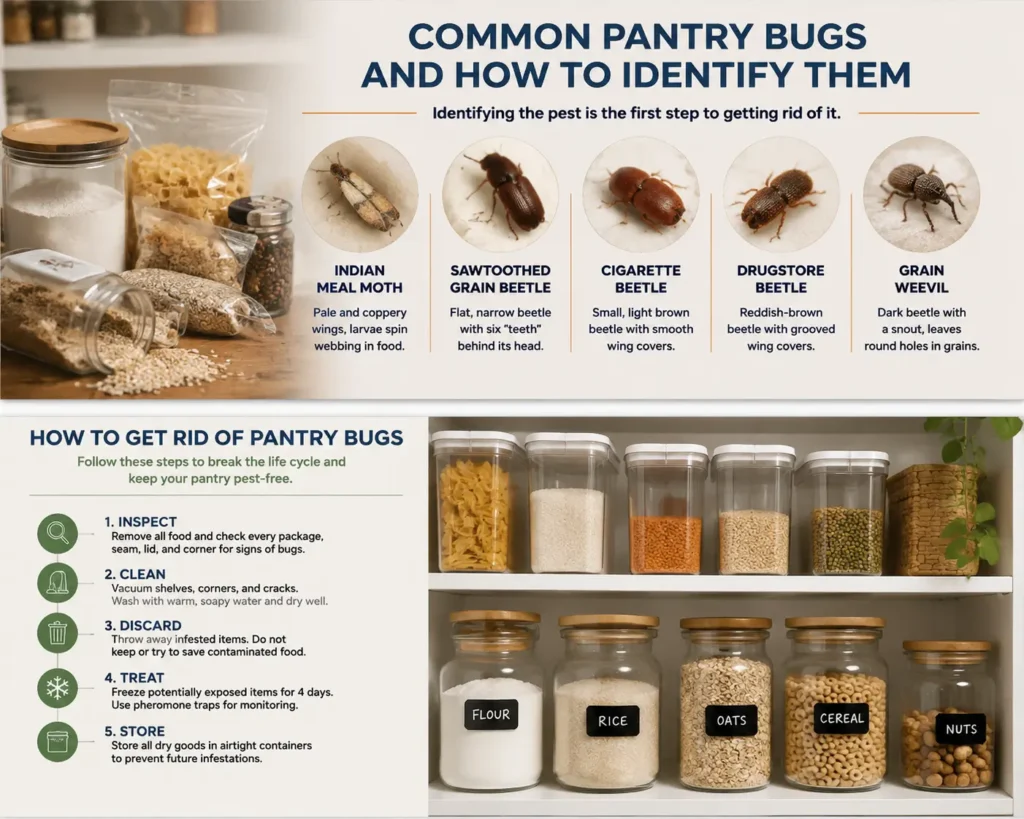
Correct identification helps you inspect the right products.
| Pest | Appearance | Common Sources | Main Clue |
| Indian meal moth | Pale and coppery wings | Cereal, nuts, seeds, pet food | Webbing or larvae |
| Sawtoothed grain beetle | Flat, narrow brown beetle | Flour, pasta, nuts | Six “teeth” behind head |
| Cigarette beetle | Rounded, light brown beetle | Spices, pet food, tobacco | Smooth wing covers |
| Drugstore beetle | Small reddish-brown beetle | Flour, bread, spices | Grooved wing covers |
| Grain weevil | Dark beetle with a snout | Rice, wheat, corn, beans | Round holes in kernels |
Indian Meal Moth
Indian meal moths have pale wings near the body and coppery tips. Their larvae feed on grains, cereal, nuts, seeds, dried fruit, birdseed, and pet food.
Look for webbing, clumped food, cast skins, and cream-colored caterpillars. Mature larvae may crawl onto walls or ceilings before forming cocoons.
Sawtoothed Grain Beetle
This flat, narrow beetle has six tooth-like projections behind its head. It enters package seams and attacks cereal, pasta, nuts, seeds, and dried fruit.
It does not normally fly, so the source is usually nearby when one appears on a pantry shelf.
Cigarette Beetle
Cigarette beetles are small, oval, light brown insects with smooth wing covers. They infest spices, herbs, grains, seeds, dried flowers, tobacco, and pet food.
These beetles are strong fliers and may gather near windows or other light sources.
Drugstore Beetle
Drugstore beetles resemble cigarette beetles but have grooved wing covers. They infest flour, bread, spices, pet food, books, and some stored medicines.
Adults can damage light packaging, so inspect unopened cardboard boxes as well as open products.
Pantry Flying Bugs — How to Identify Them
The most common pantry flying bugs are Indian meal moths, but cigarette and drugstore beetles also fly. Moths flutter near cabinets, while compact beetles may move toward windows.
Do You Know? Indian meal moth larvae can travel away from food before forming a cocoon. Inspect upper wall corners and nearby rooms, not only the pantry shelf.
Weevils – The Most Overlooked Pantry Bug
Weevil larvae develop inside whole kernels, which allows an infestation to remain hidden. Adults have a noticeable snout.
Check rice, wheat, corn, beans, and seeds for tiny round exit holes. Pour suspicious grain onto a light-colored tray for closer inspection.
Signs You Have a Pantry Bug Infestation
Repeated sightings call for a full inspection. Look for:
- Beetles inside food or crawling on shelves
- Small moths flying near cabinets
- Webbing or clumps inside dry goods
- Larvae in packages or ceiling corners
- Holes in grains, boxes, or bags
- Shed skins, cocoons, or insect fragments
- Bugs gathering near windows
Note: Inspect tea, spices, pet treats, birdseed, dried flowers, nuts, and old baking mixes. One forgotten item can keep an infestation active.
How to Get Rid of Pantry Bugs – Step-by-Step

Learning how to get rid of pantry pests means breaking the insect life cycle. Remove infested food, clean hidden debris, and protect the products that remain.
Step 1 — Remove and Inspect All Food
Empty the affected cabinet. Inspect both opened and unopened products. Check seams, folded corners, cardboard flaps, lids, and the top layer of food.
Use a flashlight or pour grains onto a baking sheet. Include pet food, birdseed, spices, tea, and nearby storage areas. One missed package can restart the problem.
Step 2 — Deep Clean the Pantry
Vacuum shelves, shelf-pin holes, corners, baseboards, drawer tracks, and cracks. Remove shelf liners when possible. Empty the vacuum outdoors or discard its bag immediately.
Wash food-contact surfaces with warm water and mild dish soap, then dry them completely. Bleach and ammonia do not prevent future infestations.
Step 3 — Discard Infested Products
Seal infested food in a bag and place it in an outdoor trash container. Discard products containing insects, webbing, larvae, holes, or damaged seals.
Do not try to remove visible insects and keep the remaining food. Eggs and larvae may be too small to see.
Step 4 — Treat the Source
Source removal is the main treatment. Pheromone traps can help monitor moths or beetles, but they cannot eliminate insects developing inside food.
Potentially exposed items may be frozen at 0°F for at least four days. Never apply household insecticide to food, dishes, food-contact surfaces, or inside packages.
Pro Tip: Record the cleanup date and monitor the area for three weeks. Continued moth activity may mean another source remains.
Step 5 — Restock with Proper Storage Containers
Return only products that have been inspected or properly treated. Store dry goods in airtight glass, metal, or heavy plastic containers.
Label containers with purchase dates and use older products first. Clear containers also make future activity easier to spot.
How to Prevent Pantry Pests From Coming Back
Use habits that limit access and reveal new activity early:
- Buy amounts you can use within a few months.
- Check packaging for holes or loose seams.
- Store vulnerable foods in sealed containers.
- Clean crumbs and flour dust immediately.
- Rotate stock using “first in, first out.”
- Inspect pet food and birdseed regularly.
- Discard expired or forgotten dry goods.
- Keep storage areas dry and uncluttered.
These measures reduce storage time, eliminate food debris, and make new infestations easier to detect.
DIY Pantry Pest Control vs. Professional Treatment
A small infestation with one clear source may respond to a full cleanout. Professional help becomes more useful when insects return.
| Situation | DIY May Be Enough | Professional Help Is Better |
| One infested package | Yes, after cleaning | Usually unnecessary |
| Several cabinets affected | Possible | Useful if activity continues |
| Bugs return after three weeks | Search again | Inspection recommended |
| Pest cannot be identified | Save a specimen | Expert identification |
| Inaccessible source | Limited access | Targeted service |
| Food business or shared building | Higher risk | Monitoring advisable |
When to Call a Professional for Pantry Pest Control
Call a professional when insects keep appearing after a full cleanout, multiple rooms are affected, or the breeding source remains hidden. Help is also useful when activity may involve wall voids, rodent bait, dead animals, commercial kitchens, or shared buildings.
A trained inspection can identify insects that may be mistaken for booklice, flies, or other small beetles.
Terminix offers pantry pest control services and eligible residential pest control plans across Eastern North Carolina and Hampton Roads. (Terminix)
Key Takeaways
Keep these core actions in mind:
- Pantry insects often arrive inside packaged food.
- Find and remove every affected product.
- Vacuum cracks, corners, and shelf holes.
- Use airtight, pest-resistant containers.
- Use traps for monitoring, not as the only solution.
- Persistent activity usually means a source remains.
Final Insights: Stop the Infestation at Its Source
The visible adult is only part of the problem. Eggs and larvae may remain inside food, package folds, shelf cracks, or overlooked pet food.
Act quickly to limit the spread, reduce food waste, and make the source easier to find.
FAQ’s
These answers cover the most common concerns homeowners have during an infestation.
What is the fastest way to remove pantry insects?
To understand how to get rid of pantry pests quickly, empty the area, discard contaminated products, vacuum every crack, and seal clean food in airtight containers.
Why do I keep seeing small bugs flying near my pantry?
Pantry flying bugs may be Indian meal moths, cigarette beetles, or drugstore beetles. Inspect dry goods, spices, pet food, birdseed, dried flowers, and nearby storage areas.
Can pantry insects get into unopened food?
Yes. Some enter through package seams or chew through paper, cardboard, foil, cellophane, and thin plastic. Hard containers offer better protection.
Are pantry pests harmful to people or pets?
Most common stored-food insects do not bite or sting. The main concern is contaminated food containing insects, webbing, cast skins, or waste. Discard affected products.
Should I spray insecticide inside my pantry?
Do not spray food, packages, dishes, or food-contact surfaces. Insecticides cannot reach insects protected inside food packages, and source removal remains essential.
How long can pantry moths remain after cleaning?
Adult Indian meal moths may appear for up to three weeks after source removal. Continued sightings often indicate that another infested item remains.
Do not let one hidden package keep the infestation active. Contact Terminix to schedule local pantry pest control support.